Blog

  • 6 Best UserZoom Alternatives for UX Research Teams in 2026

    6 Best UserZoom Alternatives for UX Research Teams in 2026

    [et_pb_section fb_built=”1″ custom_padding_last_edited=”on|phone” admin_label=”section” _builder_version=”4.16″ custom_padding=”0|3px|0|4px|false|false” custom_padding_tablet=”” custom_padding_phone=”|0px||0px” da_disable_devices=”off|off|off” global_colors_info=”{}” da_is_popup=”off” da_exit_intent=”off” da_has_close=”on” da_alt_close=”off” da_dark_close=”off” da_not_modal=”on” da_is_singular=”off” da_with_loader=”off” da_has_shadow=”on”][et_pb_row column_structure=”3_4,1_4″ custom_padding_last_edited=”on|phone” admin_label=”row” module_class=” et_pb_row_fullwidth” _builder_version=”4.16″ background_size=”initial” background_position=”top_left” background_repeat=”repeat” width=”100%” width_tablet=”100%” width_phone=”” width_last_edited=”on|desktop” max_width=”100%” max_width_tablet=”100%” max_width_phone=”” max_width_last_edited=”on|desktop” custom_padding=”72px|46px|109px|122px|false|false” custom_padding_tablet=”” custom_padding_phone=”|0px||0px” make_fullwidth=”on” global_colors_info=”{}”][et_pb_column type=”3_4″ _builder_version=”4.16″ custom_padding=”|||” global_colors_info=”{}” custom_padding__hover=”|||”][et_pb_text admin_label=”Title” _builder_version=”4.27.2″ text_font=”||||||||” header_font=”Roboto||||||||” header_text_align=”center” header_font_size=”35px” module_alignment=”center” custom_padding=”|||” hover_enabled=”0″ inline_fonts=”Roboto” global_colors_info=”{}” sticky_enabled=”0″]

    6 Best UserZoom Alternatives for UX Research Teams in 2025

    [/et_pb_text][et_pb_text ul_type=”circle” ul_position=”inside” ul_item_indent=”41px” _builder_version=”4.16″ text_font=”||||||||” text_line_height=”2.4em” ul_font=”||||||||” ul_line_height=”0.8em” max_width=”96%” custom_margin=”30px||” global_colors_info=”{}”]
    [/et_pb_text][et_pb_text ul_type=”circle” ul_item_indent=”36px” _builder_version=”4.27.2″ text_font=”||||||||” text_font_size=”16px” text_line_height=”2.6em” link_font=”|600|||||||” link_text_color=”#477ae9″ ul_font=”||||||||” ul_line_height=”2.3em” ol_font=”||||||||” header_2_font_size=”28px” header_2_line_height=”1.2em” width=”96%” max_width=”96%” custom_padding_tablet=”” custom_padding_phone=”|25px||25px|false|false” custom_padding_last_edited=”on|phone” hover_enabled=”0″ inline_fonts=”Arial” global_colors_info=”{}” sticky_enabled=”0″]

    A 2021 survey of 950 participants revealed that software developers find fixing bugs to be their main pain point. They tend to spend a lot of their time fixing problems that could have been solved with usability testing tools like UserZoom. While great for identifying and solving problems, the purpose of this tool, as well as the other UserZoom alternatives, goes much beyond that.

    There’s no need to despair if you’ve recently given it a go only to discover that it’s not the optimal website and mobile app testing tool for you; there are plenty of other UX research tools that will provide the perfect combo of usability and budget-friendliness that you are looking for.

    Why UX teams are switching from UserZoom

    ALT: A screenshot of UserZoom's website.

    UserZoom has plenty of features that make it an attractive solution for UX research teams. That being said, the platform is far from ideal, as its limited features and steep pricing plans are what urge people to explore alternatives. If you are already searching the market for UserZoom alternatives, chances are you did it for one of the following reasons:
    • The complexity vs. speed balance: UserZoom is not the optimal solution for teams that want to prioritize user needs while also streamlining the user experience.
    • Steep pricing plans: Many UserZoom competitors have much lower prices, with some offering free plans and flexible pricing features.
    • Long learning curve: Since UserZoom has a complex user interface, many new members will be overwhelmed, ultimately leading to a lot of time spent getting familiar with the tool’s key features.
    • Less than ideal tool for fast test iteration: While UserZoom does provide tools for remote UX research, it still doesn’t do it as well as some other platforms on the market.
    Ultimately, UserZoom is a solid tool for large enterprises that don’t mind paying a lot for full access to comprehensive features. Lean teams that rely on the option of having a free plan and low annual billing will find other platforms to be more suitable for their needs.

    What to consider in a UserZoom alternative

    If you’ve decided to search for another UX research tool that isn’t UserZoom, you’ll want to pay attention to some important aspects that will define how you approach usability testing. To take your UX research to the next level, you’ll want to find a solution that perfectly fits your needs; here are some of them:

    Research types supported

    When it comes to usability testing, different research types will provide unique insights. This research is most broadly categorized into qualitative and quantitative research, with both processes focusing on different things.
    • The qualitative research process focuses on understanding user behavior and their experiences. To achieve that, this research method uses comprehensive observation and detailed user feedback.
    • Quantitative research uses methods that aim to measure user performance and satisfaction. For that purpose, these research methods resort to metrics and statistics.
    If you are sure you want to switch to a UserZoom alternative, make sure it can provide you with the kind of qualitative and quantitative data you are searching for.

    Setup speed and UX

    Effective user research can not be imagined without two important components: setup speed and user experience (UX). A quick setup is imperative for a quick identification of design flaws, while UX leads to more accurate and productive feedback, as it ensures users can effectively interact with the product during testing. For many UserZoom alternatives, combining these two components is difficult. While it is not impossible to balance speed with UX, many user research platforms will focus on quick setup as opposed to smooth user experience, and vice versa. Ensure your UX research tool strikes that perfect balance between setup speed and smooth user experience.

    Moderated vs. unmoderated flexibility

    When it comes to the most popular usability testing methods, a few things can compete with the power of moderated and unmoderated testing. Unmoderated testing represents a quick and cheap way to collect information regarding your target audience, whereas moderated testing lets you dig deeper into any pain points and usability issues. The former is better for situations when you need to collect a lot of customer data quickly, whereas the latter works best for prototype testing. Since a UserZoom alternative can focus on one testing method over the other, it’s essential to pick a platform that approaches user testing in a manner most appropriate for your organization.

    Qualitative insight depth

    Some UserZoom alternatives focus on exploring the feelings and the ‘why’ behind user actions with deep qualitative insights. Unlike quantitative data, which is mostly about numbers, qualitative insights offer rich information regarding user emotions, thoughts, and challenges. Qualitative feedback is priceless for organizations. Apart from providing rich and descriptive data, insights received through this method also help identify usability issues and make informed design improvements. If quantitative metrics don’t interest you as much as qualitative data, then looking for a UserZoom alternative that’s focused on in-depth sentiment analysis should be high up on your list of priorities.

    Participant access

    The quality of a user testing platform is largely determined by its participant pool. Participant access refers to the way in which you find, recruit, and interact with people who will test your product. When browsing through UserZoom alternatives, one of your main goals should be to determine whether you need to recruit participants from your own resources, such as professional and personal networks, or you want to use a platform’s built-in pool of participants. Let’s imagine you are trying to choose between Lookback and UserTesting, as both of them are excellent user testing platforms with plenty of advanced features. Apart from ticking off all the boxes, like making sure they support the kind of research type you are interested in, one of the main things you should do is look into how they approach participant recruitment. If neither of these two yields good enough results, you should move on to researching other platforms, as your perfect match is just around the corner.

    Analysis tools

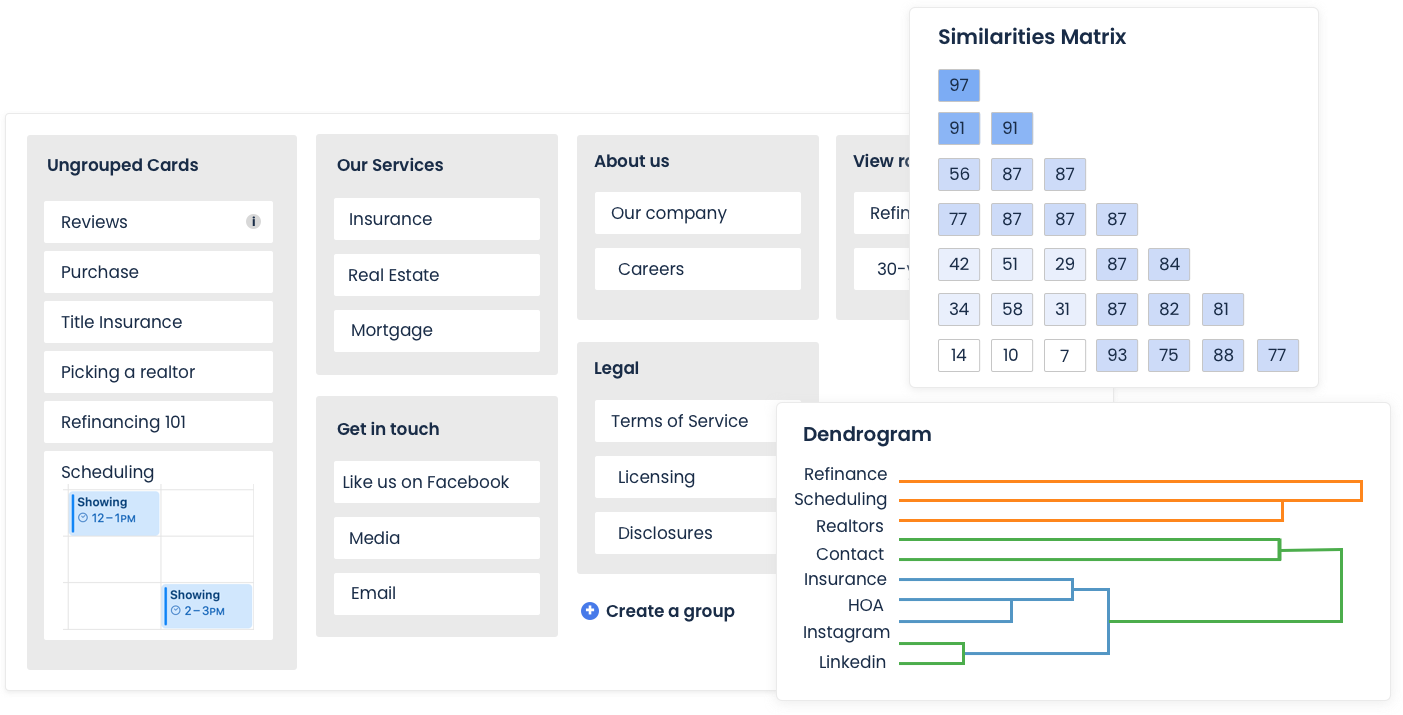
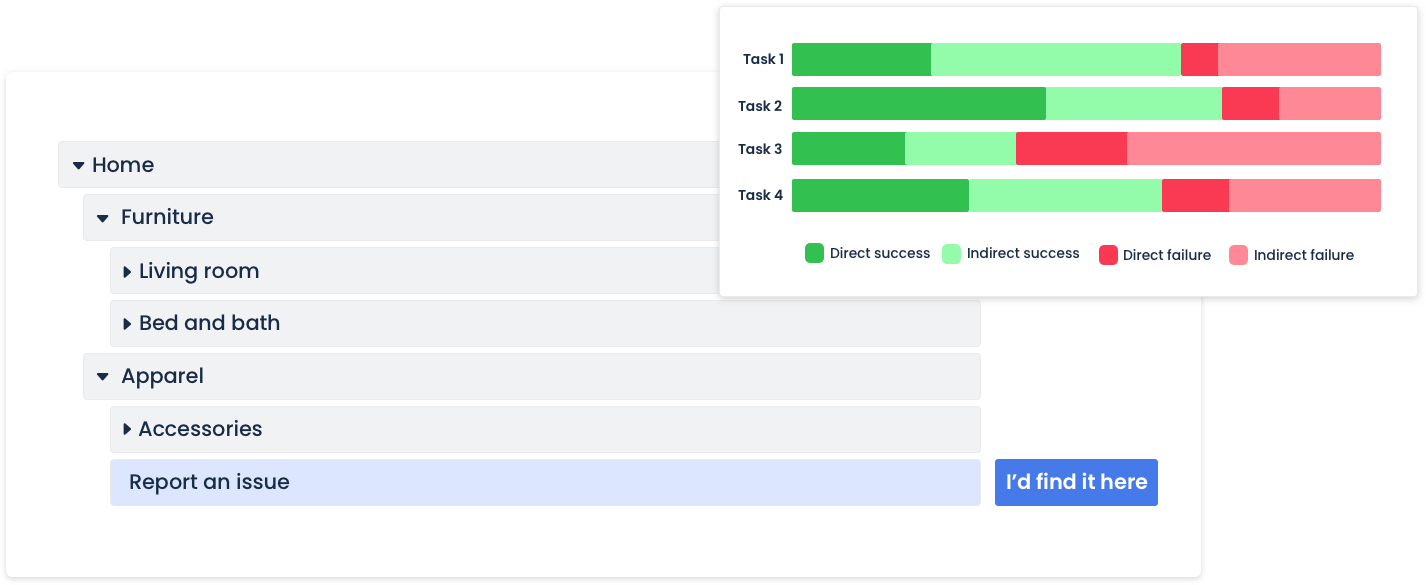
    From those that record user behavior, such as screen recordings and heatmaps, to those that analyze qualitative feedback, like transcription and sentiment analysis, there are a bunch of analysis tools that you can use to achieve your ultimate goal of collecting and analyzing precious user data. Once you start your research on the best alternative to UserZoom, you’ll see that some platforms, like PlaybookUX, excel at card sorting and surveys; others, like Useberry, focus on tree testing. Be it video feedback, card sorting, or tree testing, decide which analysis tools will fit in the best with your organization’s purpose and vision, and make that the determining factor when choosing a user testing platform.

    Collaboration tools

    Modern usability testing could not be imagined without collaboration tools, which enable easier communication, feedback sharing, and workflow management throughout the entire process. When browsing through the best usability testing tools on the market, pay special attention to how well they integrate with other tools. For example, integrating with tools like Figma and Miro will give multiple team members a chance to work on the same design simultaneously, giving way to instant feedback. When two platforms like Figma and UserZoom work together, you get perks like quick creation of prototypes, faster testing, and design validation.

    Budget & scalability

    It’s very important that the platform you choose suits your organization’s budget. Some tools come with flexible plans, like monthly billing, and they might be a better fit for startups and lean teams. Don’t make the mistake of thinking that higher-priced UX research tools come with more advantages, such as scalability. Even a tool with flexible pricing plans can be so scalable that it easily handles an increasing number of users and test participants, all the while maintaining high performance and efficiency.

    6 Best UserZoom Alternatives in 2025

    UserZoom vs. Maze? UserZoom vs. UserTesting? UserZoom or PlaybookUX? Here are all the answers you’ll need.

    PlaybookUX

    ALT: A screenshot of PlaybookUX's website.

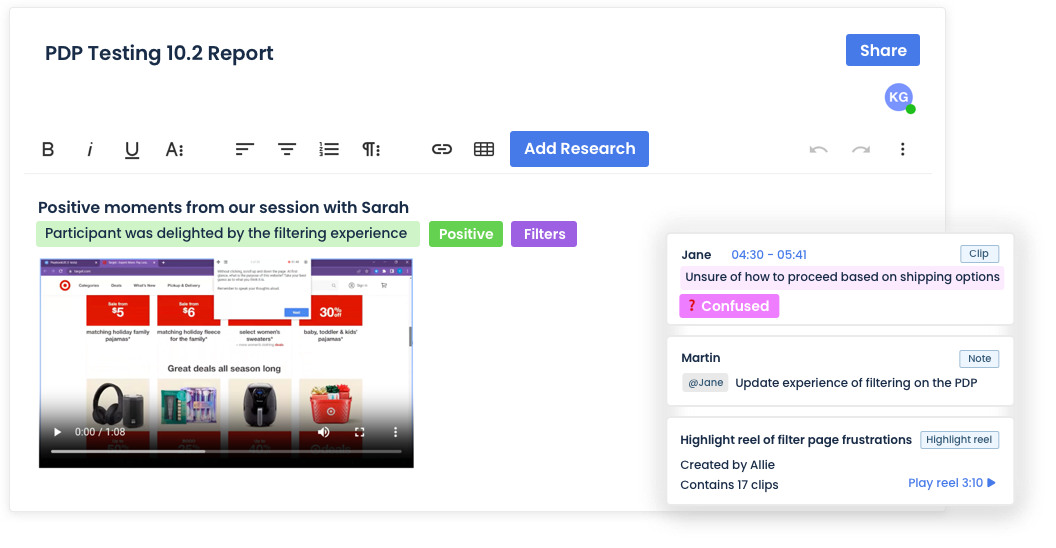
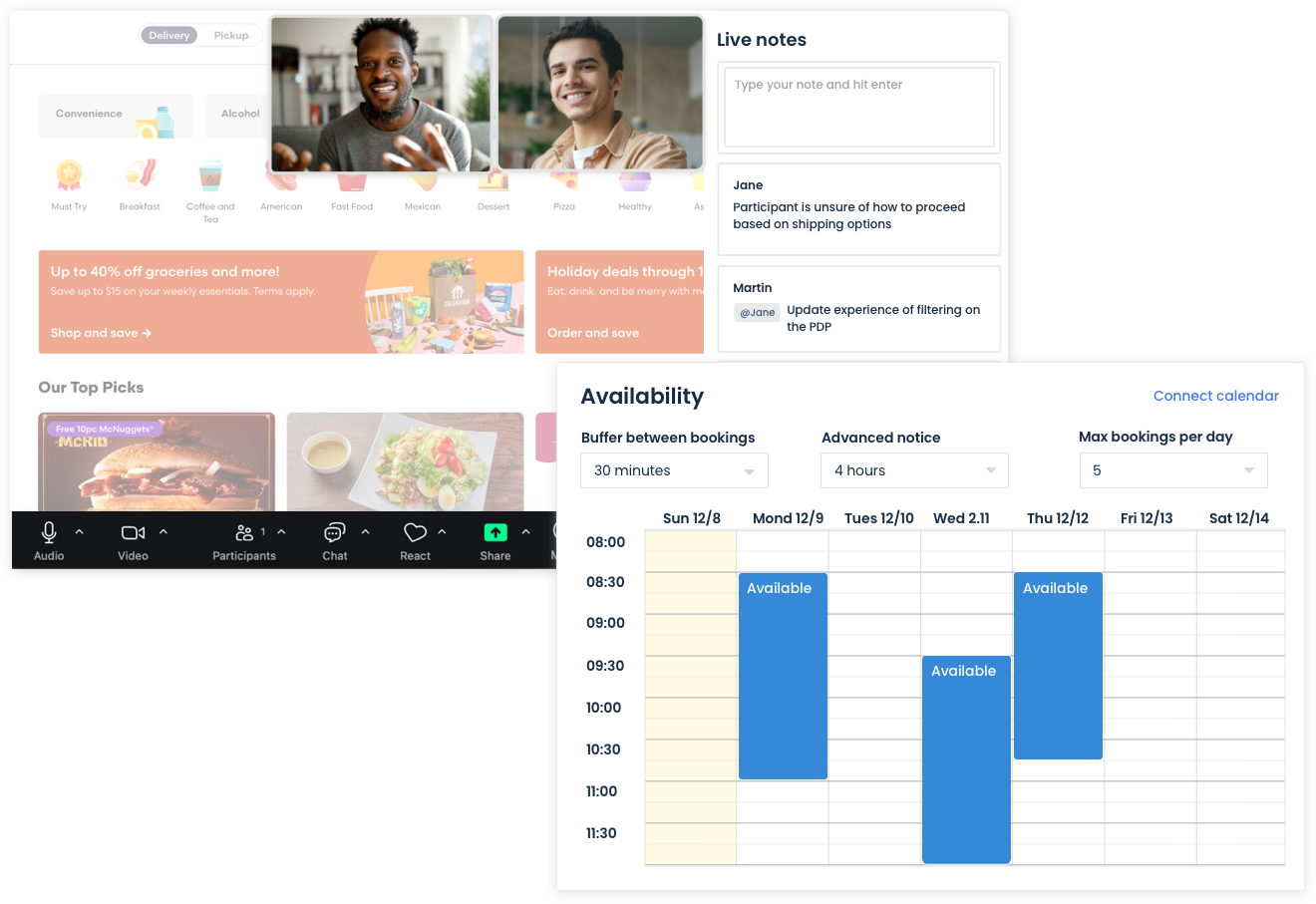
    Suppose you are interested in a UX tool that’s perfect for end-to-end user research and supports unmoderated and moderated research methods. In that case, you might want to look into PlaybookUX, which is known for its comprehensive display of analysis tools, such as card sorting and surveys. The tool also supports bring-your-own-user research, as you can use your own private or professional network of testers if you want to. If you don’t, you can always utilize the platform’s significant panel of participants, allowing you to test prototypes with minimal effort. Apart from offering both moderated and unmoderated testing methods, you’ll find PlaybookUX to be the right tool when you want to tap into advanced features. These include video interviews, taggable moments, and the creation of AI-based highlight reels. How do you decide whether you want to improve your key metrics with PlaybookUX or UserZoom? If you need a solution that’s more accessible and better suited for lean teams, then PlaybookUX is the right way to go. The platform is also great for asynchronous workflows, so you should book a demo to see how well it fits in with your company’s vision and brand values.

    Maze

    ALT: A screenshot of Maze's website.

    Maze is a UX research tool that’s predominantly used when you need to quickly test anything. It collects expert-level insights, giving your team a chance to make informed product decisions based on user data. Thus, if all you need is fast prototype testing and design validation, you won’t have to look for appropriate Maze alternatives. Maze is also known as a UX research tool that integrates well with many design tools, such as Sketch and Figma. It also includes many advanced features, giving you a chance to see how well users interact with your product in real time. Likewise, Maze has an automated reporting feature, which lets you keep track of metrics like bounce rates and heatmaps. The tool does lack deep qualitative data insights, which puts it at a disadvantage compared to other usability testing tools. It also lacks the option of user interviews, which are a crucial part of website and mobile app testing, considering they provide the most detailed look into a user’s needs, behaviors, and pain points. In comparison to UserZoom, Maze excels in providing a user-friendly interface for quick testing, but its features don’t make it ideal for full research cycles. On the other hand, UserZoom is more suited for organizations in need of in-depth UX research, as it gives access to a larger participant panel and a host of advanced features.

    UXtweak

    ALT: A screenshot taken from UXtweak's website.

    As a multi-functional platform for card sorting, tree testing, and usability benchmarking, UXtweak is a tool that supports both moderated and unmoderated testing, making it ideal for usability testing teams. It supports a variety of structured UX testing methods, such as card sorting and navigation testing, allowing you to discover deeper insights and get a glimpse of your customers’ common pain points. UXtweak goes beyond offering the most basic features, as it gives access to two valuable usability testing tools:
    1. Heatmaps, which are used to reveal areas where users are clicking and scrolling, giving insights into popular or problematic areas on a page.
    2. User flows, which are diagrams used to show the path a user takes when completing a specific task within a page or application.
    Generally speaking, UXtweak offers a solid mix of qualitative and quantitative data, and it features multiple recruitment methods. As such, it’s best for usability testing teams that need remote moderated testing, as well as teams in need of unmoderated testing options. Keep in mind that UXtweak is less intuitive than some other tools on the market, so you might find the tool’s user interface to be less than ideal. As far as the decision of UserZoom vs. UXtweak goes, know that the former is better for large enterprises that need a robust set of features, while the latter is better for smaller teams in need of versatility and cost-effective solutions.

    Useberry

    ALT: A screenshot of Useberry's website.

    Useberry is a design-centric UX research tool with plenty of special features, such as click tracking, screen flows, and time-on-task. The tool’s user-friendly interface, coupled with extensive integration capabilities and diverse testing methods, makes it one of the best UserZoom alternatives on the market. If we had to compare it to any other platforms from the list, we’d say that Useberry most closely resembles Maze. They are both lightweight tools with asynchronous workflows, making them excellent for fast prototype testing. Useberry, in particular, is best used for UI/UX validation, and it can help you design better products through unmoderated testing, which this tool relies on. As for when you should stay away from it, Useberry might not be the optimal solution when you want to receive quality insights through user interviews. The platform is also not considered to be a highly scalable solution, as it provides limited features for managing and tracking participants. You will get access to a large participant pool, but don’t expect to get access to unlimited team members. That being said, you might decide to choose Useberry over UserZoom if:
    1. You are looking for a more affordable solution.
    2. You are more interested in remote, unmoderated testing methods.
    3. You need a solution that’s more suitable for simple use cases.

    Userlytics

    ALT: A screenshot of Userlytics' website.

    Compared to other Userlytics alternatives, this tool represents a platform with a broad feature set. It offers moderated & unmoderated testing methods, as well as advanced website and mobile app testing. Versatile testing options are merely the beginning, as Userlytics also boasts a global participant pool, making it perfect for global research. Furthermore, the tool also gives access to in-platform translation for over 20 languages, and it has excellent customer support that will make conducting preference tests and other types of research a lot easier. The platform’s special Branching Logic Tool facilitates unmoderated user testing, with the option of personalizing response and action. If you decide to use Userlytics to create an effective UX strategy that can prevent shopping cart abandonment and boost your sales, you should know that this solution is perfect for advanced testers. The tool has a comprehensive feature set and an older UI, which entails a learning curve for newbies. If you are currently trying to decide between UserZoom and Userlytics, you’ll want to consider their limitations. Userlytics is known to offer unlimited concurrent testing, whereas UserZoom comes with more limitations.

    dscout

    ALT: A screenshot of dscout's website.

    When in need of a tool that specializes in longitudinal, diary-style, and in-context mobile studies, you’ll want to look no further than dscout. The tool has a comprehensive feature set that focuses on participant engagement and supports various research methods, including unmoderated testing. While anyone can use this platform, the ones who stand to gain the most from it are organizations interested in diary and mobile insights. Likewise, if you are an organization that needs comprehensive ethnographic and behavior-over-time insights, you’ll want to run tests through dscout. There are some limitations to the platform that are to be expected, such as the inability to conduct both user and usability testing. You also shouldn’t expect dscout to replace task-based usability tools, although you can count on it to add depth over time. How do digital teams and product managers decide whether to go with dscout or UserZoom? All they have to do is look into their primary focus. dscout excels in qualitative feedback and research, capturing rich, contextual user feedback. UserZoom, on the other hand, has a broader suit of tools that support both qualitative and quantitative research, which is why their pricing starts at higher numbers.

    Comparison table: Which tool fits which workflow?

    Tool Moderated testing Unmoderated testing Surveys Card sorting Diary studies AI analysis Best for
    PlaybookUX Full-cycle UX teams
    UserZoom ⚠️ Enterprise UX organizations
    Maze ⚠️ Fast design feedback
    UXtweak ⚠️ Usability testing teams
    Useberry UI/UX validation
    Userlytics ⚠️ Global unmoderated UX
    dscout Diary and mobile insights

    When to switch from UserZoom

    The time has come to make the ultimate call – do you search the market for a UserZoom alternative, or do you stick with your original choice? If you decide to search for another solution, chances are it will be due to one of the following reasons:
    • Wanting faster, lighter workflows: To optimize UserZoom workflows for better and faster results, you will need to personally enhance study setup, participant recruitment, and data analysis, which can be too much work in cases like prototype testing.
    • Needing better UX or research onboarding: With a complicated user interface and additional costs for features like surveys, UserZoom doesn’t provide the optimal user experience.
    • Paying too much for enterprise features that you aren’t using: This UX research platform undeniably comes with advanced enterprise features, but they might be obsolete for smaller teams in need of a budget-friendly solution.
    • Are a startup or mid-size team: While UserZoom is perfect for enterprises and large organizations, its features—and pricing plans—aren’t so suitable for agile teams.
    However, UserZoom can be an excellent user testing tool in cases when:
    • You need compliance and analytics integrations: Features like secure data handling, participant recruitment, and in-depth analysis make UserZoom the optimal tool for teams interested in compliance. It also provides comprehensive analytics that allow teams to measure performance easily and efficiently.
    • Work in a tightly-regulated environment: Due to its robust data privacy and security features, this UX research platform is perfect for teams working in tightly-regulated environments.
    • Already have a mature UX ops process that relies on UserZoom: In that case, why would you mess with a good thing and risk something going awfully wrong? If UserZoom already works great for your team, there’s no need to search for an alternative.

    Final thoughts: Replace complexity with clarity

    Teams should leverage the fact that there are more than a handful of UserZoom alternatives on the market and not be afraid to dig deeper. There’s a solution out there that perfectly fits your team’s size, workflow capability, and research maturity, but such a solution might not be obvious at first. Instead of looking at brand legacy, you should go ahead and research the kind of advanced analytics and features a solution offers. Now’s the time to replace complexity with clarity by opting for solutions like PlaybookUX, which are perfect for agile teams looking to run powerful, scalable studies without friction. Feel free to book a demo and find out what the key differences are between this solution and others of its kind.

    FAQs

    • What are the best UserZoom alternatives for user experience research?
    There are a few strong UserZoom alternative contenders for UX research, including Maze, which offers similar functionality. Another suitable alternative is PlaybookUX, which provides great pricing models, on top of extensive research options.
    • Which UserZoom competitors offer better pricing and similar features?
    In terms of features, Userlytics and Maze are the two UserZoom competitors that are most likely to fit in with your team’s needs. When it comes to better pricing, tools like PlaybookUX promise to be a better fit for your business.
    • What is the most beginner-friendly alternative to UserZoom?
    PlaybookUX is the most beginner-friendly alternative to UserZoom, as it comes with a simple and intuitive user interface. At the same time, it provides a sufficient number of testing options, keeping quick and reliable test results at arm’s length.
    • Why are companies switching from UserZoom to other UX research tools?
    Companies are choosing to switch from UserZoom mostly due to pricing concerns, as the tool is perfect for enterprises. They are also looking into other solutions when interested in faster and lighter workflows, and a better UX or research onboarding.[/et_pb_text][/et_pb_column][et_pb_column type=”1_4″ _builder_version=”4.16″ custom_padding=”|||” global_colors_info=”{}” custom_padding__hover=”|||”][et_pb_text ul_type=”square” _builder_version=”4.9.4″ text_font=”||||||||” link_font=”Roboto||||||||” link_text_color=”#477ae9″ ul_font=”||||||||” ul_line_height=”2.5em” header_font=”|||on|||||” header_2_font=”||||||||” header_3_font=”||||||||” header_4_font=”||||||||” header_5_font=”||||||||” header_6_font=”||||||||” max_width=”100%” custom_margin=”475px|||10px” custom_margin_tablet=”” custom_margin_phone=”|60px||” custom_margin_last_edited=”on|phone” custom_padding=”20px||20px|30px” link_option_url_new_window=”on” border_radii=”on|4px|4px|4px|4px” border_width_all=”1px” border_color_all=”rgba(77,84,115,0.31)” border_width_left=”1px” global_module=”8225″ saved_tabs=”all” inline_fonts=”Roboto” global_colors_info=”{}”]

    Resources

    UX testing

    Usability testing methods

    International user testing

    ROI of UX

    Idea validation

    User Research

    Moderated interviews

    Unmoderated user research

    User research recruiting

    Prototype testing

    Usability testing

    Concept testing

    UX research

    User Testing Templates

    [/et_pb_text][/et_pb_column][/et_pb_row][/et_pb_section][et_pb_section fb_built=”1″ _builder_version=”3.21.4″ custom_padding=”0|0px|59px|0px|false|false” da_disable_devices=”off|off|off” global_module=”4892″ saved_tabs=”all” global_colors_info=”{}” da_is_popup=”off” da_exit_intent=”off” da_has_close=”on” da_alt_close=”off” da_dark_close=”off” da_not_modal=”on” da_is_singular=”off” da_with_loader=”off” da_has_shadow=”on”][et_pb_row _builder_version=”4.16″ custom_padding=”28.7969px|0px|0|0px|false|false” global_colors_info=”{}”][et_pb_column type=”4_4″ _builder_version=”4.16″ custom_padding=”|||” global_colors_info=”{}” custom_padding__hover=”|||”][et_pb_text _builder_version=”4.16″ text_font=”Roboto||||||||” text_text_color=”#192c47″ text_font_size=”32px” text_line_height=”1.8em” text_line_height_tablet=”” text_line_height_phone=”1.2em” text_line_height_last_edited=”on|phone” global_colors_info=”{}”]

    Speak to high quality people

    [/et_pb_text][et_pb_button button_url=”https://app.playbookux.com/sign-up” button_text=”Get Started” button_alignment=”center” _builder_version=”4.16″ custom_button=”on” button_text_size=”22px” button_text_color=”#ffffff” button_bg_color=”#477ae9″ button_border_color=”#477ae9″ button_border_radius=”4px” button_font=”Roboto|500|||||||” button_icon_color=”#ffffff” custom_margin=”30px||” custom_padding=”||” global_colors_info=”{}”][/et_pb_button][/et_pb_column][/et_pb_row][/et_pb_section]
  • 7 Best Userlytics Alternatives for Smarter UX Testing in 2026

    7 Best Userlytics Alternatives for Smarter UX Testing in 2026

    [et_pb_section fb_built=”1″ custom_padding_last_edited=”on|phone” admin_label=”section” _builder_version=”4.16″ custom_padding=”0|3px|0|4px|false|false” custom_padding_tablet=”” custom_padding_phone=”|0px||0px” da_disable_devices=”off|off|off” global_colors_info=”{}” da_is_popup=”off” da_exit_intent=”off” da_has_close=”on” da_alt_close=”off” da_dark_close=”off” da_not_modal=”on” da_is_singular=”off” da_with_loader=”off” da_has_shadow=”on”][et_pb_row column_structure=”3_4,1_4″ custom_padding_last_edited=”on|phone” admin_label=”row” module_class=” et_pb_row_fullwidth” _builder_version=”4.16″ background_size=”initial” background_position=”top_left” background_repeat=”repeat” width=”100%” width_tablet=”100%” width_phone=”” width_last_edited=”on|desktop” max_width=”100%” max_width_tablet=”100%” max_width_phone=”” max_width_last_edited=”on|desktop” custom_padding=”72px|46px|109px|122px|false|false” custom_padding_tablet=”” custom_padding_phone=”|0px||0px” make_fullwidth=”on” global_colors_info=”{}”][et_pb_column type=”3_4″ _builder_version=”4.16″ custom_padding=”|||” global_colors_info=”{}” custom_padding__hover=”|||”][et_pb_text admin_label=”Title” _builder_version=”4.27.2″ text_font=”||||||||” header_font=”Roboto||||||||” header_text_align=”center” header_font_size=”35px” module_alignment=”center” custom_padding=”|||” hover_enabled=”0″ inline_fonts=”Roboto” global_colors_info=”{}” sticky_enabled=”0″]

    7 Best Userlytics Alternatives for Smarter UX Testing in 2025

    [/et_pb_text][et_pb_text ul_type=”circle” ul_position=”inside” ul_item_indent=”41px” _builder_version=”4.16″ text_font=”||||||||” text_line_height=”2.4em” ul_font=”||||||||” ul_line_height=”0.8em” max_width=”96%” custom_margin=”30px||” global_colors_info=”{}”]
    [/et_pb_text][et_pb_text ul_type=”circle” ul_item_indent=”36px” _builder_version=”4.27.2″ text_font=”||||||||” text_font_size=”16px” text_line_height=”2.6em” link_font=”|600|||||||” link_text_color=”#477ae9″ ul_font=”||||||||” ul_line_height=”2.3em” ol_font=”||||||||” header_2_font_size=”28px” header_2_line_height=”1.2em” width=”96%” max_width=”96%” custom_padding_tablet=”” custom_padding_phone=”|25px||25px|false|false” custom_padding_last_edited=”on|phone” hover_enabled=”0″ inline_fonts=”Arial” global_colors_info=”{}” sticky_enabled=”0″]

    Modern product development wouldn’t be what it is today without user research. Userlytics is one of the most prominent tools that support your research efforts and usability testing, which are essential for receiving the kind of insights that will help transform your business.

    As great as this user research platform is, it still lacks in some departments. Whether you’d like to find a tool that has more advanced reporting capabilities or offers a bigger pool of test participants, we’ve compiled a list of 7 user testing platforms that will help you bring UX testing to another level.

    Why people look for Userlytics alternatives

    Userlytics is one of the leading platforms for usability testing with a participant pool of 2 million. The tool is excellent for both moderated and unmoderated testing, and it includes a variety of research methods, such as multi-device testing, prototype testing, and live website testing. ALT: A screenshot of a portion of Userlytics' website. From user flows and click tracks to open analytics, Userlytics offers many features that assist teams in gathering design and product feedback. That being said, this UX research tool does come with a few drawbacks that might urge you to search for appropriate Userlytics alternatives:
    1. UI/UX complexity: The interface of Userlytics is not very straightforward, so it might not be the best option for teams that prioritize efficiency and ease when collecting user feedback.
    2. Pricing concerns for smaller teams: Userlytics has pricing models that are based on annual subscriptions, with Enterprise plans starting at $3,500 per year.
    3. Overwhelming test setup workflows: Being concise and breaking down complex tasks might be difficult with this tool, as it doesn’t offer the optimal workshop and interface for easy test setup workflows.
    4. Need for faster turnaround or easier collaboration: The two are crucial for agile development and the delivery of better products, and Userlytics’ inability to provide a fast turnaround rate might be reason enough to search for a more user-friendly alternative.
    5. Lack of focus on customer support and customer success: As per reviews of a Reddit user, who said you should ‘be careful of your conversations on this platform, support does nothing for you and says you are the issue,’ Userlytics isn’t known for its exceptional customer support. This is in stark contrast with some other Userlytics alternatives, like PlaybookUX, which focus heavily on customer support and satisfaction.
    6. Need for better video feedback and analysis, on-page survey tools, and onboarding: If gaining deeper insights into user behavior and obtaining more targeted feedback collection are important to you, one of the many Userlytics alternatives might be better suited to your organization.

    7 Best Userlytics alternatives to consider in 2025

    Want to get access to the best user and usability testing methodologies? Need to utilize advanced metrics and access unlimited tests? Here are some Userlytics alternatives that offer all that and more!

    PlaybookUX

    ALT: A screenshot of the PlaybookUX's website. PlaybookUX is an end-to-end UX research tool that supports both moderated and unmoderated testing. Apart from that, PlaybookUX offers a wide range of testing tools, including card sorting, surveys, tree testing, and AI analysis. One of the main advantages of PlaybookUX is its flexible pricing model. The pay-as-you-go pricing model is perfect for lean teams that aren’t interested in long-term subscriptions, making the platform perfect for startups, agencies, and product-led organizations. Whether a UX researcher, designer, or product manager of a large enterprise, there are many reasons why you’ll want to book a demo and try out PlaybookUX. Become focused on designing better products by relying on PlaybookUX’s ability to:
    • Allow users to tailor report dashboards to their needs.
    • Easily integrate the platform with design tools.
    • Use comprehensive research methods.
    In comparison to Userlytics, PlaybookUX stands apart as the more budget-friendly solution of the two. However, Userlytics has some features that PlaybookUX doesn’t, such as real-time note-taking. Despite that, both solutions are great for both moderated and unmoderated testing, and your choice might ultimately boil down to what you can afford.

    UXtweak

    ALT: A screenshot of UXtweak's website. UXtweak is another Userlytics alternative that offers both moderated and unmoderated testing. It’s an all-encompassing platform that puts surveys, card sorting, recruitment panels, and AI analysis at your disposal. Apart from being good for structured tests and navigation testing, UXtweak also:
    • Offers session recordings, heatmaps, and survey responses.
    • Presents a perfect option for usability audits and UX optimization work.
    • Lacks some features that would make it perfect for live interviews.
    Both UXtweak and Userlytics have their distinct strengths. UXtweak is strong in information architecture research, website testing, and user behavior analytics, while Userlytics is known for its diverse range of advanced features, like accessibility and VR testing.

    Trymata (formerly TryMyUI)

    ALT: An screenshot of Trymata's website. Trymata, previously known as TryMyUI, is one of the tools you can use when you want to take your UX research to the next level. This tool offers moderated and unmoderated research services, and it’s considered to be perfect for task-based usability tests. Still, focus is on moderated testing, and the tool is limited in terms of qualitative research and advanced reporting. The biggest advantage of Trymata is its budget-friendliness. You can choose among three pricing models, including:
    1. Starter – $399 per month
    2. Pro – $1667 per month
    3. Agency – $3333 per month
    As great as Trymata is for quick tests, it’s still somewhat of a limited user research method, as it has a panel size of 500k participants. The tool also doesn’t have the most user-friendly interface, so some users might find it hard to navigate. Comparing this UX research tool with Userlytics yields interesting results. They both offer usability testing, but they differ in everything from their features to pricing and participant panels. Trymata is better for providing qualitative insights through user interviews, while Userlytics offers more testing methods and a larger participant pool. If you want to improve your key metrics, a more comprehensive solution (like Userlytics) is a better option.

    Maze

    ALT: A screenshot of the Maze website. Maze is another popular platform for collecting user feedback that’s best known for its rapid prototype testing with design integrations, including Figma and Adobe XD. This UX research tool is considered to be excellent for early-stage validation, and user feedback has shown that the platform is characterized by its ease of use. Maze might be one of the leading user research platforms on the market, but it’s not without its flaws. For starters, it doesn’t support moderated testing, nor does it offer deeper qualitative insights. Users also have a problem with Maze’s pricing options, as many of its advanced features aren’t available until you opt for a custom plan, which can get quite expensive. The main difference between Maze and Userlytics is in their intended use. As a solution that’s speedy and doesn’t involve a steep learning curve, Maze is optimal for rapid prototype testing during the design phase. On the other hand, Userlytics is better suited for strategic, long-term user research, as it provides a more comprehensive suite of features, including UX consulting and quality controls.

    UserTesting

    ALT: A UserTesting website screenshot. UserTesting is a video-based user research tool that lets you facilitate both moderated and unmoderated research by using its pool of 1 million participants from different geographical regions. This enterprise-level testing suite with global tester access supports mobile device testing for both iOS and Android platforms. Apart from being an excellent tool for moderated and unmoderated research, UserTesting also allows for interviews, usability tests, and diary studies, all in a real-time and remote setting. When it comes to unmoderated testing, which is still supported by this tool, the product lacks some state-of-the-art integrations that are widely used. While this research tool can be used by small, medium, and large organizations, its pricing model makes it perfectly suited for larger organizations. Their custom pricing plans can start at $30k per year, and this price reflects well on their comprehensive tools and extensive compliance features. As far as how UserTesting compares to Userlytics, the former is known to be a solution better suited for organizations with bigger budgets, while the latter is thought to be a more cost-effective option with flexible pricing models. There are also many UserTesting alternatives that come with budget-friendly plans, and a detailed analysis of all of them will reveal the optimal solution for your needs.

    Useberry

    ALT: A Useberry website screenshot. Useberry is similar to Maze in the sense that it presents a one-stop shop for product research throughout the entire product development process. It’s an interesting tool with lots of testing options and a solid range of integrations. This prototype-first testing platform for designers is perfect for small teams, and it’s an essential tool that will help conduct user research when you want to see interaction paths and enjoy easy-to-launch tasks. Useberry is characterized by many special features, such as:
    • Metrics perfect for quantitative feedback collection, such as completion and misclick rates.
    • Integration with Prolific for participant recruitment.
    • A significant range of unmoderated testing methods, like surveys, card sorting, and preference testing.
    • The ability to record a person’s video and voice, and make screen recordings while they are in the middle of testing.
    Useberry is one of the best Userlytics alternatives, but the tool is not flawless. It’s not a perfect solution for scaling UX research, since the free plan only allows up to 10 responses and one monthly project. You only get unlimited responses if you choose the Enterprise plan, with screener questions being available on paid plans only. Userlytics and Useberry are similar, as they are both UX research platforms, but they both cater to different needs. Useberry is a solution that’s perfect for unmoderated testing, while Userlytics offers a more extensive list of solutions, including moderated and unmoderated testing.

    Loop11

    ALT: A screenshot of Loop11's website. From usability testing and benchmarking to A/B tests and IA Testing, Loop11 is a user research platform that lets you conduct all these necessary tests. One of its biggest pros is that it connects to design tools like Figma, as well as supports audio and video recordings for unmoderated studies. While Loop11 can be used by different organizations looking for a tool with advanced reporting capabilities, it’s still best suited for teams wanting a methodical and structured testing setup. It’s imperative to mention that Loop11 provides both qualitative and quantitative insights and facilitates desktop and mobile app testing. As for the downsides, Loop11 is considered to be a solution with a complex UX that is hard to learn. The tool also doesn’t provide support for in-product surveying and experience management, and has no editing capabilities. As opposed to Userlytics, which offers a wider range of research methodologies, Loop11 gives more data-informed insights. The former also focuses on quantitative usability testing and has advanced reporting capabilities.

    Comparison table: How these tools stack up

    Tool Moderated testing Unmoderated testing Surveys Card sorting Recruitment panel AI analysis Best for
    PlaybookUX Yes Yes Yes Yes Yes Yes Full-cycle UX teams
    Userlytics Yes Yes Yes No Yes Yes Enterprise-level UX
    UXtweak Yes Yes Yes Yes Yes Yes Mid-size UX organizations
    Trymata Yes Yes, but with limitations Yes Yes Yes Yes Testing customer journeys
    Maze Yes Yes Yes Yes Yes Yes Organizations needing complex research methods
    UserTesting Yes Yes Yes Yes Yes Yes Larger organizations
    Useberry Yes Yes Yes Yes Yes Yes Small teams
    Loop11 Yes Yes Yes Yes Yes Yes Teams in need of a methodical and structured setup

    What to look for in a Userlytics alternative

    Have you decided to give Userlytics alternatives a go, but still aren’t sure which solution will prove to be the best one for your needs? Whether you want to employ an effective UX strategy to prevent shopping cart abandonment or are interested in performing sentiment analysis, here are some aspects of these platforms you’ll want to keep in mind.

    Types of testing supported

    Before selecting a tool, the first thing you’ll want to do is decide which type of research methodology you want to employ. As you were able to notice, some of these platforms support both moderated and unmoderated testing, while others focus on one over the other. Likewise, some of them, like PlaybookUX, come jam-packed with plenty of special tools, such as surveys, card sorting, tree testing, and others. Decide which tools you want to use to gather user insights, and let that be one of the determining factors when it comes to which Userlytics alternative you pick.

    Participant recruitment options

    How do you wish to perform usability testing and get contextual feedback? Do you want to have users interact through your personal and professional networks, which can include social media and market research firms? Do you want to get an in-depth analysis by accessing a global tester pool with high participant quality that the platform will provide? Is it important for you to have customizable screeners? Sitting down and answering these questions will give you actionable insights into the kind of Userlytics alternative that will be optimal for your organization.

    Qualitative insights and analysis

    It’s not a matter of whether you need to look for qualitative insights and analysis, as nearly all teams can benefit from them; rather, it’s a matter of finding a platform that offers deeper insights through features such as session transcripts, note-taking, sentiment tagging, and AI highlight reels. Once you find a Userlytics alternative that can examine complex data received from user interactions, giving you an understanding of the ‘how’ and ‘why’ behind user behavior, you can examine the tool’s remaining features to see how well they fit in with your team’s needs and limitations.

    Ease of use and learning curve

    How willing are you to learn complex functions of the best usability testing tools on the market? If the answer is not very, then you’ll want to choose a solution that provides valuable insights without involving a steep learning curve. While usability is nice to have for all organizations, it’s particularly important for lean teams that focus on efficiency, flexibility, and collaboration with the intention of meeting specific goals.

    Price and scale flexibility

    Like it or not, the price is going to be a huge determining factor. If you are lucky enough to have an unlimited budget, you could go for any of the above-mentioned platforms, including some others we haven’t mentioned, like UserZoom. However, if you do have to be mindful of the price, you’ll need to look for a solution that will not only fit your budget but also correspond to your company’s scaling potential. Some of these platforms have advanced enterprise features that make them perfect for large organizations and companies; others possess the simplicity and effectiveness that small startups and growing teams need. Ensure that the option you choose can fit in with your current financial status, but also adapt to the vision of your business you have in mind.

    When to switch from Userlytics (and when to keep it)

    UXtweak or PlaybookUX? Lookback vs. UserTesting? Loop11 or Useberry? Let’s first see if you even have to make this decision by helping you decide when to switch from Userlytics and when to keep it! Userlytics is an excellent tool for acquiring user feedback and user sentiment analysis when you already have workflow automation built around it. It’s also great for automating visual testing, comparing screenshots from different languages and geo-targeted areas, and targeting specific demographics. Considering its advanced features and reporting capabilities, organizations might decide to stick with Userlytics when they need enterprise-level security, permissions, and governance. On the other hand, there are just as many reasons to look for Userlytics alternatives and opt for another tool that will help you test usability. These include:
    • Needing a platform with a faster setup and a better UI, as Userlytics isn’t the fastest tool on the market, leading to efficiency problems.
    • Requiring a tool that can support more diverse test types, as it lacks suitable video analysis and survey tools.
    • Not having a budget for a high-quality solution, urging you to switch to an alternative that can provide more value for less money.
    • Wanting a deeper qualitative analysis and more moderated flexibility, since Userlytics can be limited in these areas due to its lack of advanced tools, like word clouds and heatmaps.

    Final thoughts: Choose tools that match your testing culture

    A user research platform can have all these amazing features on paper, such as detailed analytics, mobile testing options, and amazing participant recruitment options, but that doesn’t mean they are the right fit for your business. When exploring alternatives to Userlytics, you’ll want to ensure the platform you choose works well with your product cycle, team size, and research depth. In most cases, choosing a platform like PlaybookUX that strikes the right balance between power and simplicity will be the right call. You can always book a demo before making the final decision, giving you an idea of the kind of meaningful studies you can conduct in the future. As long as you have an outline of the kind of testing culture your organization has and how you want to collect feedback, it should be fairly easy to choose the best solution.

    FAQs

    • What is the best Maze alternative?
    There are several user research and testing platforms you can choose from if you are looking for the best Maze alternative, as they have similar features. These include PlaybookUX, UserTesting, and Lyssna.
    • What is the difference between Maze and Lyssna?
    The main difference between Maze and Lyssna is in what they focus on. Maze is best known for its wide range of research methodologies and comprehensive integrations with design tools, while Lyssna is more focused on user feedback and areas of unmoderated testing.
    • What is the difference between UserZoom and Maze?
    UserZoom and Maze are both user research platforms, but they have different features and areas of focus. UserZoom is best known for its large participant panel, while Maze is famous for being a speedy tool that integrates well with other platforms, such as Figma.[/et_pb_text][/et_pb_column][et_pb_column type=”1_4″ _builder_version=”4.16″ custom_padding=”|||” global_colors_info=”{}” custom_padding__hover=”|||”][et_pb_text ul_type=”square” _builder_version=”4.9.4″ text_font=”||||||||” link_font=”Roboto||||||||” link_text_color=”#477ae9″ ul_font=”||||||||” ul_line_height=”2.5em” header_font=”|||on|||||” header_2_font=”||||||||” header_3_font=”||||||||” header_4_font=”||||||||” header_5_font=”||||||||” header_6_font=”||||||||” max_width=”100%” custom_margin=”475px|||10px” custom_margin_tablet=”” custom_margin_phone=”|60px||” custom_margin_last_edited=”on|phone” custom_padding=”20px||20px|30px” link_option_url_new_window=”on” border_radii=”on|4px|4px|4px|4px” border_width_all=”1px” border_color_all=”rgba(77,84,115,0.31)” border_width_left=”1px” global_module=”8225″ saved_tabs=”all” inline_fonts=”Roboto” global_colors_info=”{}”]

    Resources

    UX testing

    Usability testing methods

    International user testing

    ROI of UX

    Idea validation

    User Research

    Moderated interviews

    Unmoderated user research

    User research recruiting

    Prototype testing

    Usability testing

    Concept testing

    UX research

    User Testing Templates

    [/et_pb_text][/et_pb_column][/et_pb_row][/et_pb_section][et_pb_section fb_built=”1″ _builder_version=”3.21.4″ custom_padding=”0|0px|59px|0px|false|false” da_disable_devices=”off|off|off” global_module=”4892″ saved_tabs=”all” global_colors_info=”{}” da_is_popup=”off” da_exit_intent=”off” da_has_close=”on” da_alt_close=”off” da_dark_close=”off” da_not_modal=”on” da_is_singular=”off” da_with_loader=”off” da_has_shadow=”on”][et_pb_row _builder_version=”4.16″ custom_padding=”28.7969px|0px|0|0px|false|false” global_colors_info=”{}”][et_pb_column type=”4_4″ _builder_version=”4.16″ custom_padding=”|||” global_colors_info=”{}” custom_padding__hover=”|||”][et_pb_text _builder_version=”4.16″ text_font=”Roboto||||||||” text_text_color=”#192c47″ text_font_size=”32px” text_line_height=”1.8em” text_line_height_tablet=”” text_line_height_phone=”1.2em” text_line_height_last_edited=”on|phone” global_colors_info=”{}”]

    Speak to high quality people

    [/et_pb_text][et_pb_button button_url=”https://app.playbookux.com/sign-up” button_text=”Get Started” button_alignment=”center” _builder_version=”4.16″ custom_button=”on” button_text_size=”22px” button_text_color=”#ffffff” button_bg_color=”#477ae9″ button_border_color=”#477ae9″ button_border_radius=”4px” button_font=”Roboto|500|||||||” button_icon_color=”#ffffff” custom_margin=”30px||” custom_padding=”||” global_colors_info=”{}”][/et_pb_button][/et_pb_column][/et_pb_row][/et_pb_section]
  • 5 Best Maze Alternatives for Deeper UX Research in 2026

    5 Best Maze Alternatives for Deeper UX Research in 2026

    [et_pb_section fb_built=”1″ custom_padding_last_edited=”on|phone” admin_label=”section” _builder_version=”4.16″ custom_padding=”0|3px|0|4px|false|false” custom_padding_tablet=”” custom_padding_phone=”|0px||0px” da_disable_devices=”off|off|off” global_colors_info=”{}” da_is_popup=”off” da_exit_intent=”off” da_has_close=”on” da_alt_close=”off” da_dark_close=”off” da_not_modal=”on” da_is_singular=”off” da_with_loader=”off” da_has_shadow=”on”][et_pb_row column_structure=”3_4,1_4″ custom_padding_last_edited=”on|phone” admin_label=”row” module_class=” et_pb_row_fullwidth” _builder_version=”4.16″ background_size=”initial” background_position=”top_left” background_repeat=”repeat” width=”100%” width_tablet=”100%” width_phone=”” width_last_edited=”on|desktop” max_width=”100%” max_width_tablet=”100%” max_width_phone=”” max_width_last_edited=”on|desktop” custom_padding=”72px|46px|109px|122px|false|false” custom_padding_tablet=”” custom_padding_phone=”|0px||0px” make_fullwidth=”on” global_colors_info=”{}”][et_pb_column type=”3_4″ _builder_version=”4.16″ custom_padding=”|||” global_colors_info=”{}” custom_padding__hover=”|||”][et_pb_text admin_label=”Title” _builder_version=”4.27.2″ text_font=”||||||||” header_font=”Roboto||||||||” header_text_align=”center” header_font_size=”35px” module_alignment=”center” custom_padding=”|||” hover_enabled=”0″ inline_fonts=”Roboto” global_colors_info=”{}” sticky_enabled=”0″]

    5 Best Maze Alternatives for Deeper UX Research in 2025

    [/et_pb_text][et_pb_text ul_type=”circle” ul_position=”inside” ul_item_indent=”41px” _builder_version=”4.16″ text_font=”||||||||” text_line_height=”2.4em” ul_font=”||||||||” ul_line_height=”0.8em” max_width=”96%” custom_margin=”30px||” global_colors_info=”{}”]
    [/et_pb_text][et_pb_text ul_type=”circle” ul_item_indent=”36px” _builder_version=”4.27.2″ text_font=”||||||||” text_font_size=”16px” text_line_height=”2.6em” link_font=”|600|||||||” link_text_color=”#477ae9″ ul_font=”||||||||” ul_line_height=”2.3em” ol_font=”||||||||” header_2_font_size=”28px” header_2_line_height=”1.2em” width=”96%” max_width=”96%” custom_padding_tablet=”” custom_padding_phone=”|25px||25px|false|false” custom_padding_last_edited=”on|phone” hover_enabled=”0″ inline_fonts=”Arial” global_colors_info=”{}” sticky_enabled=”0″]

    You’ve probably used Maze to test a prototype or two. Maybe it was a quick first-click test or a five-second impression check. It’s fast, friendly, and fits right into your Figma workflow. But if you’re here, you’re probably wondering… is Maze enough?

    As both user testing and usability testing research become more complex, spanning interviews, surveys, diary studies, and AI-assisted analysis, teams are starting to outgrow tools that only scratch the surface.

    Whether you’re looking for richer insights, mixed-method studies, or a platform that can handle everything from moderated interviews to in-depth surveys, this guide will walk you through five strong Maze alternatives worth considering in 2025.

    Why teams are exploring Maze alternatives

    Maze made a name for itself as the go-to tool for quick, design-stage validation. It’s clean, easy to use, and fits neatly into a product designer’s toolkit. If you’re building prototypes in Figma or Sketch and want instant feedback without overcomplicating things, Maze delivers.

    Maze research tool insights

    Source: Maze

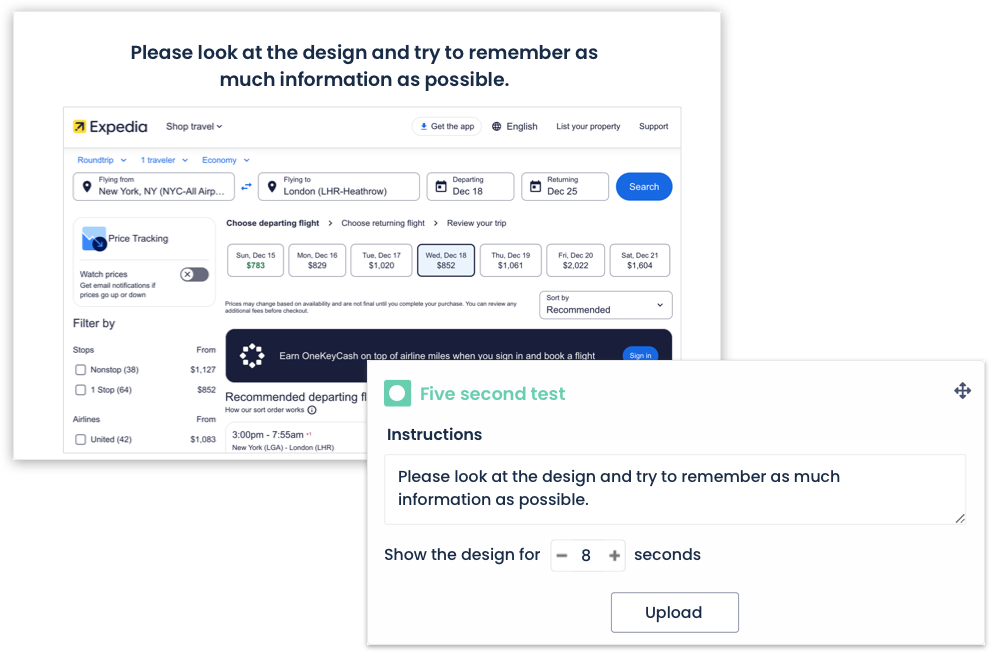
    It’s especially popular with lean teams and early-stage startups who need rapid, async insights. The ability to run unmoderated usability tests, preference tests, and five-second tests — all without leaving your design environment — makes it appealing for fast iteration. Add a modern UI and low learning curve, and it’s easy to see why Maze has become so widely adopted in design-led workflows.

    But here’s the catch: as research needs mature, Maze starts to fall short.

    Once teams move beyond simple prototype validation and start asking bigger questions — about user motivations, pain points, or long-term user behavior — they find themselves reaching for tools Maze simply doesn’t offer. You can’t conduct user interviews. You can’t dig into longitudinal insights. And it’s hard to trust data from surface-level UX testing methods when you’re making decisions that impact entire product directions.

    Pros and cons of using Maze and Maze alternatives

    Source: Reddit

    And teams aren’t shy about voicing that frustration. In UX Slack groups, Reddit threads, and product blogs, the feedback is clear: Maze is great for what it does — but not for what it doesn’t.

    Maze for user testing - a dissappointed thread on Reddit

    Source: Reddit

    Here’s what you’ll often see listed as dealbreakers, and key reasons why you are here looking for Maze alternatives:

    • No support for moderated user interviews
    • Lacks qualitative depth (no video recordings, transcripts, open-ended responses)
    • Limited survey logic and custom flow options
    • No diary studies or longitudinal research capabilities
    • Hard to recruit niche B2B or low-incidence audiences
    • Minimal analysis tools — no tagging, highlight reels, or AI synthesis
    • Insights often feel surface-level and require follow-up tools to act on

    5 best Maze alternatives in 2025 

    If Maze has hit its limits for your team, you’re not alone. Whether you’re looking for richer qualitative insights, moderated interviews, or a full-suite research platform that scales with your needs, there is an alternative to Maze for you out there.

    Below, we break down five Maze alternatives that go deeper, each with its own strengths, ideal use cases, and tradeoffs. Let’s start with PlaybookUX.

    PlaybookUX

    PlaybookUX is a full-featured user research platform designed to support both moderated and unmoderated studies. It covers a wide range of user research methods, including video interviews, usability testing, card sorting, tree testing, and surveys — all from a single dashboard.

    Screenshot of PlaybookUX user dashboard for usability testing

    Source: PlaybookUX

    The setup process is intuitive, and you can choose between bringing you own participants or recruiting from a global panel with detailed screeners. PlaybookUX also includes AI-powered tools to tag insights, summarize themes, and speed up analysis. Whether you’re testing an early idea or refining a final prototype, PlaybookUX adapts to different workflows and team sizes without forcing you into a rigid structure.

    Core features

    • Moderated video interviews with scheduling, recording, and observer options
    • Unmoderated testing process, task flows, and mobile app testing
    • Offers multiple testing methods such as card sorting and tree testing
    • Survey builder with logic branching for custom question flows
    • Participant recruitment via a global panel or BYO users
    • Advanced screeners to find exactly the right participants
    • AI-powered tools for tagging responses, identifying patterns, and summarizing survey responses and user feedback
    • Role-based permissions and async-friendly design for remote collaboration of multiple team members

    Strengths vs Maze

    Maze is great when you just need to test a prototype and get quick, directional feedback. But once your research projects need structured studies, deeper insight, or actual conversations with users, that’s where Maze falls short and makes room for PlaybookUX. With PlaybookUX, you can combine qualitative and quantitative research, recruit niche participants with precision screeners, and run moderated studies that deliver richer, more actionable feedback data.

    Its support for mixed methods — like card sorting, tree testing, and long-form usability testing — makes it a strong alternative for teams who want to explore user behavior in more depth. Plus, the AI features help cut down the time it takes to analyze large volumes of data, which is especially useful when you want to record unlimited responses for a major research project.

    Where it falls short

    • Not designed for in-person research methods

    Who it’s best for

    PlaybookUX is especially strong for enterprise UX teams looking to streamline everything from user testing setup to insights delivery, without the limitations of Maze’s lightweight approach.

    Userlytics

    Userlytics is a remote usability testing platform tailored for teams that want to customize every detail of their tests for a market research. From prototype testing to surveys and advanced branching logic, it’s built for structured studies that go far beyond Maze’s quick feedback style. With support for both moderated and unmoderated tests — plus coverage across mobile apps, websites, and desktop products — Userlytics offers the depth.

    Userlytics dashboard

    Source: Userlytics

    Core features

    • Moderated and unmoderated usability testing
    • Logic-driven test flows with conditional branching
    • Prototype testing, surveys, and card sorting
    • Global recruitment with targeting across 150+ countries
    • Screen recording with UX scoring and metrics
    • Video playback and post-session feedback data
    • Works on desktop, tablet, and mobile testing environments
    • Support for multiple languages and cross-border studies

    Strengths vs Maze

    While Maze is built for simple prototype testing, Userlytics supports more complex research use cases. Its advanced logic lets you customize tasks and questions based on user responses — great for researchers who need to test different paths or segments. It also delivers high-quality screen recordings and behavioral data, which Maze lacks entirely.

    Where it falls short

    • The user interface feels more functional than friendly, not as smooth as design-first tools
    • The logic setup and dashboard may take some getting used to
    • Limited native integrations for design and PM workflows
    • Processing time to collect feedback or export video can be slow in larger studies

    Who it’s best for

    Userlytics is a strong match for UX teams and researchers who need user insights, moderated and unmoderated research, and use video research methodologies. It’s especially useful when your research involves multiple flows, device types, or regions.

    UserTesting

    UserTesting is one of the most established names in usability testing — widely used by large organizations to run continuous research across digital products. It supports both moderated and unmoderated testing capabilities and is designed to support a large number of research participants, making it a strong option for companies with global operations, multiple stakeholders, and high-volume feedback needs.

    UserTesting Dashboard

    Source: UserTesting

    Core features

    • Moderated interviews with scheduling, screen sharing, and recording
    • Unmoderated usability testing for web, mobile apps, and prototypes
    • Prototype testing, survey tool, card sorting, and concept validation
    • Abiity to recruit participants through a large, vetted global panel
    • Rich video feedback with tagging, notes, and highlight reels
    • Built-in metrics and dashboards for team collaboration
    • Integrations with major analytics, project management, and design tools

    Strengths vs Maze

    Compared to Maze, which is optimized for fast, lightweight prototype testing, UserTesting offers a full research suite. You can conduct live interviews, design custom test flows, recruit from a broad panel, and capture detailed behavioral feedback — including facial expressions, voice tone, and screen interactions for better sentiment analysis.

    It also supports broader use cases like mobile app testing, long-form surveys, and post-session follow-ups, helping UX teams generate both quantitative and qualitative feedback data.

    Where it falls short

    • High cost — pricing model often starts in the tens of thousands per year
    • Requires a sales call to access plans and features
    • Can feel complex and heavyweight for smaller teams
    • Some users report clunky navigation and a non-intuitive user interface

    Who it’s best for

    UserTesting is built for large UX research teams who are running global studies, coordinating multiple departments, or tracking longitudinal changes over time. Suppose your team needs a high-capacity platform that covers everything from moderated interviews to detailed usability testing at scale. In that case, this is a top-tier — but probably the most expensive — option.

    Lyssna

    Lyssna (formerly UsabilityHub) is another user research studies platform on our list of Maze alternatives focused on fast, simple validation. It works well for gathering quick impressions on visual design, messaging, and layout decisions — especially during the early stages of the creative process. If your team wants immediate user feedback on UI elements or copy variations, Lyssna makes it easy to launch tests and get answers in minutes.

    Lyssna optimal workshop with minimalistic design

    Source: Lyssna

    Core features

    • First-click tests, five-second tests, and preference testing
    • Survey builder with customizable flows
    • Prototype testing with simple visual interfaces
    • Built-in panel of over 690,000 participants, plus BYO user option
    • Filtering by demographic, location, and behavior
    • Compatible for website testing as well as a mobile testing environment
    • Minimal learning curve with easy test setup
    • User-friendly interface

    Strengths vs Maze

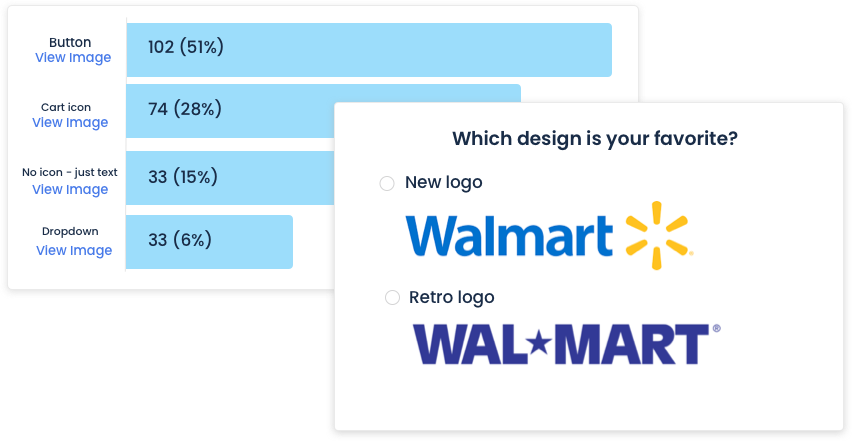
    Lyssna and Maze both shine when it comes to async, design-stage feedback — but Lyssna is even more stripped down and speed-focused when you need basic research. If you’re testing which call-to-action button performs better or which layout gets more attention, Lyssna can give you fast, directional feedback without requiring any design tool integration.

    Where it falls short

    • No support for moderated usability testing or live interviews
    • Doesn’t capture deep behavioral insights or session videos
    • Lacks advanced features like tree testing, AI-powered analysis, or diary studies
    • Not ideal for teams conducting full-cycle user research

    Who it’s best for

    Lyssna is a good fit for marketing teams, product designers, and startups looking to validate ideas quickly. It’s particularly useful for simple user testing: A/B testing headlines, comparing visuals, or running surveys with basic targeting.

    But if your team is looking for deeper qualitative insights, user flows, or multi-method research, Lyssna isn’t built for that, and tools like PlaybookUX or Userlytics will offer more comprehensive coverage.

    Loop11

    Loop11 is a long-standing user testing platform that deserves to be included in our list of top 5 Maze alternatives.

    Loop11 run usability tests user interface

    Source: Loop11

    Loop 11 specializes in task-based usability testing for live web and mobile projects, as well as prototypes. It’s built for structured evaluations, where you’re measuring how easily users complete tasks, not just whether they like a design. While it doesn’t have the sleek user interface of newer tools, it offers solid research fundamentals and detailed performance metrics that many UX veterans still rely on.

    Core features

    • Unmoderated usability testing on live sites or staged prototypes
    • Task-based flows with success metrics, time-on-task, and click paths
    • Heatmaps and clickstream analysis
    • Survey integration for follow-up questions
    • BYO participants or external panel integration
    • Multilingual support for global studies
    • Compatible with desktop and mobile app testing methods

    Strengths vs Maze

    Unlike Maze, which focuses on quick, high-level feedback during the design phase, Loop11 allows teams to test fully developed digital experiences in the wild. Its usability testing tools are geared toward measuring real user performance, not just collecting impressions or opinions. You’ll get actionable data on where users succeed, fail, and drop off, which is key for optimizing conversion flows, onboarding experiences, or complex UIs.

    Loop11 also supports heatmaps and task analytics that go deeper than Maze’s standard reports, making it more suitable for diagnostic studies and UX audits.

    Where it falls short

    • The interface feels dated and less intuitive compared to modern platforms (not your optimal workshop)
    • No built-in participant recruitment — you’ll need to bring your own users or connect a third-party panel
    • Doesn’t support moderated sessions or interviews
    • Lacks integrations with Figma or collaboration tools

    Who it’s best for

    Loop11 is a strong choice for UX researchers and CRO teams who need to test task flows on live products or staging environments. If your focus is on usability testing with measurable outcomes, rather than fast design validation, Loop11 offers the structure and metrics to support that.

    Maze alternatives comparison table

    Tool Moderated Unmoderated Card Sorting Diary Studies Own Panel AI Analysis Best For
    PlaybookUX Enterprise UX teams
    Userlytics Custom logic & global reach
    UserTesting Global companies
    Lyssna Quick design feedback
    Loop11 Live site usability testing

    How to choose the right Maze alternative

    Maze is a great entry point — but when your research needs grow, choosing the right next tool depends on how your team works, what you’re testing, and how deep you need to go. Here’s a breakdown to help you choose the best fit based on your research style, workflow, and insight goals.

    What kind of research are you running?

    Start by identifying your primary research methods. Are you focused on quick prototype testing, or are you running deeper studies like card sorting or moderated interviews?

    conduct usability testing: card sorting vs tree testing

    Source: NN/g

    • If you’re validating early design choices (like button placement or page hierarchy), tools like Lyssna and Maze are lightweight and efficient.
    • But if you’re doing surveys, tree testing, or need to understand how users complete complex flows, you’ll need something more versatile, like PlaybookUX or Userlytics.

    For example, your product team, which is redesigning an onboarding flow, would benefit from PlaybookUX’s card sorting and tree testing, while also running follow-up usability testing to spot friction points.

    Think in terms of the full research lifecycle — from idea validation to post-launch refinement. The more varied your research needs, the more flexibility your platform should offer.

    Do you need moderated or unmoderated studies?

    Maze is purely unmoderated — great for async feedback, but limited if you want to talk to users in real time.

    a woman sitting at a table with a laptop

    Source: Unsplash

    • If your research involves live video calls, follow-up probing, or observing reactions in context, you’ll need moderated testing.
    • Platforms like PlaybookUX, UserTesting, and Userlytics support live interviews and remote moderated testing with built-in scheduling, screen sharing, and session recording.

    For instance, if you are testing user trust during signup, you might need moderated sessions to observe facial reactions, ask clarifying questions, and understand hesitation — something Maze simply can’t do.

    If all you need are quick, broad reactions, unmoderated might suffice. But when user emotions or nuanced decision-making matter, moderated testing is non-negotiable.

    Do you bring your own participants or need a panel?

    Maze often requires you to source your own users. That’s fine if you already have access — but limiting if you don’t.

    person working on blue and white paper on board

    Source: Unsplash

    • Some Maze alternatives (like PlaybookUX, Userlytics, and UserTesting) offer built-in participant panels with advanced panel targeting criteria and filters by demographics, industry, geography, and behavior.
    • Others, like Loop11, expect you to bring your own users or use an external recruitment service.

    If your UX team is looking to test with procurement professionals and will need refined screening, PlaybookUX’s panel tools and screener options make this possible, while Maze can’t help with niche targeting.

    Recruitment is often the bottleneck in user research. Choose a platform that aligns with your sourcing strategy and saves you time.

    How deep do you need your insights to go?

    Maze gives you fast answers — but not rich ones. There are no videos, no follow-up questions, and no way to observe behavior beyond a click map.

    User insights available with Maze

    Source: Maze

    If your team needs to extract meaning from behavior, consider tools with:

    • Session tagging and highlight reels (UserTesting, PlaybookUX)
    • AI-generated summaries and theme detection (PlaybookUX)
    • Transcripts and time-stamped comments (Userlytics)

    Let’s say you’re preparing a usability report for your leadership team — PlaybookUX allows you to tag moments of confusion, auto-generate insights, and share polished clips with stakeholders. That level of depth turns raw user feedback into decision-ready insights.

    If synthesis and storytelling are part of your workflow, look for platforms that help you move from data to decisions, not just record the clicks.

    What’s your team size and workflow?

    This might be the biggest deciding factor. Maze is popular with solo UX designers and small startups because it’s lightweight and fast. But it simply doesn’t scale well.

    three men sitting while using laptops and watching man beside whiteboard

    Source: Unsplash

    • PlaybookUX is built for mid-sized and enterprise teams who need secure user testing infrastructure, role-based permissions, multiple user seats, and support across departments.
    • UserTesting is similarly robust, but often priced out of reach for many teams.
    • On the other hand, Lyssna and Loop11 might work for lean teams that just need to run the occasional study without complex coordination.

    And, of course, the size of your team goes along with your budget scope. Some tools have affordable packages, while others, like PlaybookUX, offer flexible pricing to help you get started. And, for large enterprises, you will usually be able to agree on a custom pricing model that covers everything you need.

    If your research involves cross-functional teams, scaling insights, or managing compliance, you’ll want something that’s truly enterprise-ready, not just a nice-looking tool with surveys.

    When to switch from Maze (and when to keep it) 

    Maze still has its place, especially for design teams. But as your research needs evolve, its limitations can start to hold you back. So, how do you know if it’s time to make the switch?

    Automated test reports of heatmaps with Maze

    Source: Maze

    Maze might still be a good fit if:

    • You mostly need quick, async feedback on Figma prototypes
    • Your team works in tight sprint cycles and prioritizes speed over depth
    • You’re a solo designer or early-stage team doing basic validation
    • You’re testing visual hierarchy, CTA placements, or UI copy
    • You’re okay with simple, directional data (e.g., click rates, time to complete)

    If your research process is lightweight and lives mostly inside your design tools, Maze can be an efficient part of your workflow — no need to overcomplicate things.

    Analytics tools available for system usability scale with PlaybookUX

    Source: PlaybookUX

    It’s probably time to switch if:

    • You need to run user interviews or moderated usability sessions
    • Your team wants in-depth qualitative feedback, not just numbers
    • You rely on longer surveys, conditional logic, or tree testing
    • You’re expanding to multiple product lines, geographies, or user segments
    • Your research impacts high-stakes decisions and needs better analysis tools
    • You want to recruit niche participants or track responses over time
    • You’re part of a mid-sized or enterprise team doing research at a large scale

    As soon as your team starts asking more strategic questions — the kind that require context, follow-up, or synthesis — Maze starts to feel more like a stepping stone than a solution.

    Final thoughts

    Maze is a great tool for what it’s built to do: fast, frictionless validation during the design phase. If you’re just looking to get a few quick insights on a prototype or test some UI decisions before shipping, it absolutely gets the job done.

    But as your research questions become more complex, and your need for qualitative depth, mixed methods, and cross-functional collaboration grows, Maze starts to show its limits.

    That’s where tools like PlaybookUX step in. It offers a full-spectrum research workflow: moderated interviews, unmoderated usability testing, surveys, card sorting, tree testing, AI-powered analysis, and flexible participant recruitment. All without the bloated cost or rigid contracts of legacy enterprise platforms.

    If your team is ready to go beyond surface-level feedback and start running research that drives product decisions, it might be time to upgrade your toolkit.

    Book a demo today and see how PlaybookUX can support your research from first click to final insight.

    FAQs

    What is the best maze alternative?

    It depends on your goals. If you’re looking for a full-featured user research platform that supports moderated testing, advanced analysis, and global recruitment of participants, PlaybookUX is a strong choice.

    What is the difference between Maze and Lyssna?

    Both tools focus on fast, unmoderated feedback, but Maze emphasizes prototype testing with Figma integrations, while Lyssna is more about simple preference tests and first-click studies. Lyssna is often used for validating marketing or design decisions, whereas Maze leans more into early UX testing.

    What is the difference between UserZoom and Maze?

    UserZoom (which is now being phased out after merging with UserTesting) was an enterprise-grade platform designed for large-scale usability testing with advanced workflows, moderated interviews, and deep analytics. In contrast, Maze is built for async, lightweight prototype validation, with limited depth and no support for interviews or video analysis.

    [/et_pb_text][/et_pb_column][et_pb_column type=”1_4″ _builder_version=”4.16″ custom_padding=”|||” global_colors_info=”{}” custom_padding__hover=”|||”][et_pb_text ul_type=”square” _builder_version=”4.9.4″ text_font=”||||||||” link_font=”Roboto||||||||” link_text_color=”#477ae9″ ul_font=”||||||||” ul_line_height=”2.5em” header_font=”|||on|||||” header_2_font=”||||||||” header_3_font=”||||||||” header_4_font=”||||||||” header_5_font=”||||||||” header_6_font=”||||||||” max_width=”100%” custom_margin=”475px|||10px” custom_margin_tablet=”” custom_margin_phone=”|60px||” custom_margin_last_edited=”on|phone” custom_padding=”20px||20px|30px” link_option_url_new_window=”on” border_radii=”on|4px|4px|4px|4px” border_width_all=”1px” border_color_all=”rgba(77,84,115,0.31)” border_width_left=”1px” global_module=”8225″ saved_tabs=”all” inline_fonts=”Roboto” global_colors_info=”{}”]

    Resources

    UX testing

    Usability testing methods

    International user testing

    ROI of UX

    Idea validation

    User Research

    Moderated interviews

    Unmoderated user research

    User research recruiting

    Prototype testing

    Usability testing

    Concept testing

    UX research

    User Testing Templates

    [/et_pb_text][/et_pb_column][/et_pb_row][/et_pb_section][et_pb_section fb_built=”1″ _builder_version=”3.21.4″ custom_padding=”0|0px|59px|0px|false|false” da_disable_devices=”off|off|off” global_module=”4892″ saved_tabs=”all” global_colors_info=”{}” da_is_popup=”off” da_exit_intent=”off” da_has_close=”on” da_alt_close=”off” da_dark_close=”off” da_not_modal=”on” da_is_singular=”off” da_with_loader=”off” da_has_shadow=”on”][et_pb_row _builder_version=”4.16″ custom_padding=”28.7969px|0px|0|0px|false|false” global_colors_info=”{}”][et_pb_column type=”4_4″ _builder_version=”4.16″ custom_padding=”|||” global_colors_info=”{}” custom_padding__hover=”|||”][et_pb_text _builder_version=”4.16″ text_font=”Roboto||||||||” text_text_color=”#192c47″ text_font_size=”32px” text_line_height=”1.8em” text_line_height_tablet=”” text_line_height_phone=”1.2em” text_line_height_last_edited=”on|phone” global_colors_info=”{}”]

    Speak to high quality people

    [/et_pb_text][et_pb_button button_url=”https://app.playbookux.com/sign-up” button_text=”Get Started” button_alignment=”center” _builder_version=”4.16″ custom_button=”on” button_text_size=”22px” button_text_color=”#ffffff” button_bg_color=”#477ae9″ button_border_color=”#477ae9″ button_border_radius=”4px” button_font=”Roboto|500|||||||” button_icon_color=”#ffffff” custom_margin=”30px||” custom_padding=”||” global_colors_info=”{}”][/et_pb_button][/et_pb_column][/et_pb_row][/et_pb_section]
  • 6 UX Design Elements That Can Greatly Increase Email Conversions

    6 UX Design Elements That Can Greatly Increase Email Conversions

    [et_pb_section fb_built=”1″ custom_padding_last_edited=”on|phone” admin_label=”section” _builder_version=”4.16″ custom_padding=”0|3px|0|4px|false|false” custom_padding_tablet=”” custom_padding_phone=”|0px||0px” da_disable_devices=”off|off|off” global_colors_info=”{}” da_is_popup=”off” da_exit_intent=”off” da_has_close=”on” da_alt_close=”off” da_dark_close=”off” da_not_modal=”on” da_is_singular=”off” da_with_loader=”off” da_has_shadow=”on”][et_pb_row column_structure=”3_4,1_4″ custom_padding_last_edited=”on|phone” admin_label=”row” module_class=” et_pb_row_fullwidth” _builder_version=”4.16″ background_size=”initial” background_position=”top_left” background_repeat=”repeat” width=”100%” width_tablet=”100%” width_phone=”” width_last_edited=”on|desktop” max_width=”100%” max_width_tablet=”100%” max_width_phone=”” max_width_last_edited=”on|desktop” custom_padding=”72px|46px|109px|122px|false|false” custom_padding_tablet=”” custom_padding_phone=”|0px||0px” make_fullwidth=”on” global_colors_info=”{}”][et_pb_column type=”3_4″ _builder_version=”4.16″ custom_padding=”|||” global_colors_info=”{}” custom_padding__hover=”|||”][et_pb_text admin_label=”Title” _builder_version=”4.16″ text_font=”||||||||” header_font=”Roboto||||||||” header_text_align=”center” header_font_size=”35px” module_alignment=”center” custom_padding=”|||” inline_fonts=”Roboto” global_colors_info=”{}”]

    6 UX Design Elements That Can Greatly Increase Email Conversions

    [/et_pb_text][et_pb_image src=”https://www.playbookux.com/wp-content/uploads/2023/05/6-UX-Design-Elements-That-Can-Greatly-Increase-Email-Conversions.png” alt=”6-UX-Design-Elements-That-Can-Greatly-Increase-Email-Conversions” title_text=”6-UX-Design-Elements-That-Can-Greatly-Increase-Email-Conversions” align=”center” align_tablet=”center” align_phone=”” align_last_edited=”on|desktop” _builder_version=”4.16″ width=”77%” max_width=”64%” max_width_tablet=”” max_width_phone=”0%” max_width_last_edited=”on|phone” module_alignment=”center” custom_margin=”25px|||” custom_padding=”0px||” global_colors_info=”{}”][/et_pb_image][et_pb_text ul_type=”circle” ul_position=”inside” ul_item_indent=”41px” _builder_version=”4.16″ text_font=”||||||||” text_line_height=”2.4em” ul_font=”||||||||” ul_line_height=”0.8em” max_width=”96%” custom_margin=”30px||” global_colors_info=”{}”]

    [/et_pb_text][et_pb_text ul_type=”circle” ul_item_indent=”36px” _builder_version=”4.16″ text_font=”||||||||” text_font_size=”16px” text_line_height=”2.6em” link_font=”|600|||||||” link_text_color=”#477ae9″ ul_font=”||||||||” ul_line_height=”2.3em” ol_font=”||||||||” header_2_font_size=”28px” header_2_line_height=”1.2em” width=”96%” max_width=”96%” custom_padding_tablet=”” custom_padding_phone=”|25px||25px|false|false” custom_padding_last_edited=”on|phone” inline_fonts=”Arial” global_colors_info=”{}”]

    Photo by Marília Castelli on Unsplash

    It only takes a couple of seconds to grab your customers’ attention. The same applies if you want to grab their attention in an email.

    User experience (UX) is vital, and there is plenty of content for anyone who wants to know more about website UX. However, there needs to be more content about email marketing UX.

    The thing with email UX is that it’s often forgotten, even ignored. Poorly designed emails can lead to fewer conversions, loss in revenues, and even erosion of brand trust.

    Why does UX matter in email marketing?

    Many marketers need to pay more attention to the effect UX can have on emails. But if your job proposal in an email doesn’t move, inspire, or prompt immediate action, the client will close your email- maybe forever.

    Meanwhile, if your email can offer an excellent user experience, your subscribers appreciate and respect your brand and products. You can connect with their emotions and engage with them better.

    Simply put, email UX is an experience a customer or subscriber has interacting with your emails. An effective UX design involves everything that allows visitors to do every task successfully and effortlessly.

    Now, we’ll walk you through the top design elements that can significantly increase email conversions:

    1. Catchy and personalized subject line

    An excellent subject line will give readers a reason why they should open your email in the first place. Then, they will notice the second element after checking who the sender is, and it tells users what to do next. No matter the purpose of your email marketing campaign, a great subject line will entice them to read your company’s news.

    So, make sure that you keep these subject lines direct, relevant, and personalized. This makes the recipient feel special. Include worthwhile motivation, like using keywords to catch their attention and show a real-life benefit such as product promotion or offer. A good email builder will help you create highly effective email campaigns.

    2. Responsive and accessible design

    It’s 2023, and you must catch up if you’re not creating mobile-friendly email designs.

    Do you know that 81% of subscribers like reading emails through smartphones? You need to ensure that your emails don’t just look great on mobile but also on desktop well. It would help to keep your emails’ width from 550 to 600 px. This is to prevent loading issues on mobile devices.

    By ensuring that your site is responsive, you’ll attract more visitors and boost your conversions. You can try using a hamburger menu allowing users to navigate your site on smaller screens. Similarly, you can opt for bigger buttons and font sizes so that it’s easy for mobile users to click links they’re interested in. Making these simple changes encourages more people to visit your site.

    3. Scannable email content

    You only have a couple of seconds to communicate your message. Writing clearly and concisely can be challenging and not given the respect it deserves, especially in email.
    So, let’s assume that subscribers will only scan your email. It would help if you made it easy for them.

    Here are some tips:

    • Start with the bare minimum of the copy to get your point across. Try to limit the number of words you use.
    • The best length of the body copy is around 50 to 60 characters.
    • Your email should have specific goals. You shouldn’t be sending emails if you can’t justify why you’re sending them in the first place.
    • If your goal is to convert, you need to consider the value proposition. Answer why users should click through in the first place. If you have a solid value proposition, subscribers will say, “If I click, I’m getting value out of it.”

    4. Clear call-to-action

    It’s also vital that you tailor your call to action in a way that stands out and will generate more conversions. Make sure that you have a solid call to action because the last thing you want is to get mixed messages that will only confuse readers.

    Use bold and isolated colors that match the colors that you use for your campaign. It would help if you also use text links rather than image buttons. Also, make sure that you avoid using navigation bars in your email to maintain the focus on your CTA.

    When you test various buttons, you must check how many users click the button and what they’ll do after they click. Are they more likely to sign up for a newsletter? Buy from you? Download an ebook?

    When you track the results, you can quickly develop the right call-to-action button that works well for your site.

    5. Animated GIFs

    It might be tempting to place videos in your emails to showcase your products in action. But the thing about videos is that they don’t convert as well as on web pages. Opening them on mobile consumes a lot of data, creates noise, and takes away users from their email clients.

    Fortunately, a great workaround is to use animated GIFs. Animated GIFs show how your product works without forcing them to watch the whole video. While it doesn’t have the same quality a video might have, it consumes less data, doesn’t have audio, and can be used on any device.

    6. Directional cues

    While telling users what to focus on in your emails is almost impossible, you can guide them using directional cues. These cues are design elements that nudge the readers in a particular direction. These can be subtle, like running a faint line across the page, or could be as bold as an arrow pointing to a CTA.

    The purpose of these cues is to guide the user’s gaze as they scroll down the email. Instead of an arrow, you can use graphics that gently point downward toward the CTA. The reader’s eyes will naturally trace the graphic’s direction and immediately notice the CTA.

    A great example is using arrows. It guides the user to the checkout page. It lets you say, “Ignore everything else on the page, and please focus on this.”

    Using strategically placed and angled arrows, you should highlight your most important page elements. Tie a sequence of arrows together to create a path for your visitors to follow. This usually ends at your CTA.

    Over to You

    So there you have it. Ensure you follow these UX design principles and use the correct UI elements. While this may vary from brand to brand, these handy tips will help you boost your conversion rates.

    Remember that combining a great UX design and a good email marketing campaign will pave the way for success. Good luck!

    [/et_pb_text][/et_pb_column][et_pb_column type=”1_4″ _builder_version=”4.16″ custom_padding=”|||” global_colors_info=”{}” custom_padding__hover=”|||”][et_pb_text ul_type=”square” _builder_version=”4.27.4″ text_font=”–et_global_body_font|600|||||||” link_font=”–et_global_body_font|500|||||||” link_text_color=”#477ae9″ ul_font=”||||||||” ul_line_height=”2.5em” header_font=”|||on|||||” header_2_font=”||||||||” header_3_font=”||||||||” header_4_font=”||||||||” header_5_font=”||||||||” header_6_font=”||||||||” max_width=”100%” custom_margin=”475px|||10px” custom_margin_tablet=”” custom_margin_phone=”|60px||” custom_margin_last_edited=”on|phone” custom_padding=”20px||20px|30px” link_option_url_new_window=”on” hover_enabled=”0″ border_radii=”on|4px|4px|4px|4px” border_width_all=”1px” border_color_all=”rgba(77,84,115,0.31)” border_width_left=”1px” global_module=”8225″ saved_tabs=”all” inline_fonts=”Roboto,Poppins” global_colors_info=”{}” sticky_enabled=”0″]

    Resources

    Unmoderated research

    Moderated interviews

    Surveys

    Tree testing

    Card sorting

    First click testing

    Five second testing

    Preference testing

    Figma integration

    Session replays & intercepts

    AI-enabled research

    Participant panel

    Participant CRM

    Intercepts

    [/et_pb_text][/et_pb_column][/et_pb_row][/et_pb_section][et_pb_section fb_built=”1″ _builder_version=”3.21.4″ custom_padding=”0|0px|59px|0px|false|false” da_disable_devices=”off|off|off” global_module=”4892″ saved_tabs=”all” global_colors_info=”{}” da_is_popup=”off” da_exit_intent=”off” da_has_close=”on” da_alt_close=”off” da_dark_close=”off” da_not_modal=”on” da_is_singular=”off” da_with_loader=”off” da_has_shadow=”on”][et_pb_row _builder_version=”4.16″ custom_padding=”28.7969px|0px|0|0px|false|false” global_colors_info=”{}”][et_pb_column type=”4_4″ _builder_version=”4.16″ custom_padding=”|||” global_colors_info=”{}” custom_padding__hover=”|||”][et_pb_text _builder_version=”4.16″ text_font=”Roboto||||||||” text_text_color=”#192c47″ text_font_size=”32px” text_line_height=”1.8em” text_line_height_tablet=”” text_line_height_phone=”1.2em” text_line_height_last_edited=”on|phone” global_colors_info=”{}”]

    Speak to high quality people

    [/et_pb_text][et_pb_button button_url=”https://app.playbookux.com/sign-up” button_text=”Get Started” button_alignment=”center” _builder_version=”4.16″ custom_button=”on” button_text_size=”22px” button_text_color=”#ffffff” button_bg_color=”#477ae9″ button_border_color=”#477ae9″ button_border_radius=”4px” button_font=”Roboto|500|||||||” button_icon_color=”#ffffff” custom_margin=”30px||” custom_padding=”||” global_colors_info=”{}”][/et_pb_button][/et_pb_column][/et_pb_row][/et_pb_section]

  • Card sorting, what is it? How does it work?

    Card sorting, what is it? How does it work?

    [et_pb_section fb_built=”1″ custom_padding_last_edited=”on|phone” admin_label=”section” _builder_version=”3.22″ custom_padding=”0|3px|0|4px|false|false” custom_padding_tablet=”” custom_padding_phone=”|0px||0px” da_disable_devices=”off|off|off” global_colors_info=”{}” da_is_popup=”off” da_exit_intent=”off” da_has_close=”on” da_alt_close=”off” da_dark_close=”off” da_not_modal=”on” da_is_singular=”off” da_with_loader=”off” da_has_shadow=”on”][et_pb_row column_structure=”3_4,1_4″ custom_padding_last_edited=”on|phone” admin_label=”row” module_class=” et_pb_row_fullwidth” _builder_version=”3.25″ background_size=”initial” background_position=”top_left” background_repeat=”repeat” width=”100%” width_tablet=”100%” width_phone=”” width_last_edited=”on|desktop” max_width=”100%” max_width_tablet=”100%” max_width_phone=”” max_width_last_edited=”on|desktop” custom_padding=”72px|46px|109px|122px|false|false” custom_padding_tablet=”” custom_padding_phone=”|0px||0px” make_fullwidth=”on” global_colors_info=”{}”][et_pb_column type=”3_4″ _builder_version=”3.25″ custom_padding=”|||” global_colors_info=”{}” custom_padding__hover=”|||”][et_pb_text admin_label=”Title” _builder_version=”4.14.4″ text_font=”||||||||” header_font=”Roboto||||||||” header_text_align=”center” header_font_size=”35px” module_alignment=”center” custom_padding=”|||” inline_fonts=”Roboto” global_colors_info=”{}”]

    Card sorting, what is it? How does it work?

    [/et_pb_text][et_pb_image src=”https://www.playbookux.com/wp-content/uploads/2023/01/card-sorting-what-is-it-how-does-it-work-1.png” alt=”card-sorting-what-is-it-how-does-it-work-1″ title_text=”card-sorting-what-is-it-how-does-it-work-1″ align=”center” align_tablet=”center” align_phone=”” align_last_edited=”on|desktop” _builder_version=”4.14.4″ width=”77%” max_width=”64%” max_width_tablet=”” max_width_phone=”0%” max_width_last_edited=”on|phone” module_alignment=”center” custom_margin=”25px|||” custom_padding=”0px||” global_colors_info=”{}”][/et_pb_image][et_pb_text ul_type=”circle” ul_position=”inside” ul_item_indent=”41px” _builder_version=”3.27.4″ text_font=”||||||||” text_line_height=”2.4em” ul_font=”||||||||” ul_line_height=”0.8em” max_width=”96%” custom_margin=”30px||” global_colors_info=”{}”]

    [/et_pb_text][et_pb_text ul_type=”circle” ul_item_indent=”36px” _builder_version=”4.14.4″ text_font=”||||||||” text_font_size=”16px” text_line_height=”2.6em” link_font=”|600|||||||” link_text_color=”#477ae9″ ul_font=”||||||||” ul_line_height=”2.3em” ol_font=”||||||||” header_2_font_size=”28px” header_2_line_height=”1.2em” width=”96%” max_width=”96%” custom_padding_tablet=”” custom_padding_phone=”|25px||25px|false|false” custom_padding_last_edited=”on|phone” hover_enabled=”0″ inline_fonts=”Arial” global_colors_info=”{}” sticky_enabled=”0″]Are your customers having a hard time finding parts of your website, or are getting stuck in your navigation flow? It might be time to try a card sort test – a simple yet powerful tool for reorganizing and streamlining your information architecture!

    Today we’re going to talk about how card sorting can help you make meaningful changes to the flow of your website – I’ll take you through why using a card sort can be useful for navigation, what different types of card sorts you can run, and how to use analytics to act on your research.

    So first, let’s talk about information architecture and navigation!

    For those of you who may be new to Information Architecture (IA), or need a refresher, IA is sort of like the skeleton of a website – when and where do you show a person a certain piece of content? Giving the user all of the content all at once can be very overwhelming, but it can also be difficult for a user to go through multiple submenus to find the thing they are looking for. So building a site map, where you list out every webpage and how it connects to each other, and building a great navigation system helps make your website more usable.

    However, that is just one part of it: when a user visits your website, they do not want to click around to find the things that they need – they want to find what they are looking for right away. According to Nielsen Norman Group: “…users leave many sites feeling that the content/functionality was not what they wanted and they experience friction because of poor organization, structure and/or nomenclature.” (Link) Ideally, you want users to find the content they need with the fewest amount of clicks, and improving IA helps make the navigation more intuitive to achieve that goal. Investing time in making sure your site navigation is easy to understand and fluid with your content can ensure you are retaining users as they scroll through.

    How do you determine if your navigation works, or your content is easy to find?

    This is where user research can come in handy! You can always run more qualitative studies to get in depth on how a person is thinking and doing the motions, but one of the easiest ways to get a top down view of your audience is by running a quantitative study, like a card sort!

    A card sort is an exercise where you will ask participants to sort a list of things (cards) into either predetermined categories or categories that they create. This is a great exercise to run while you are building or revamping your navigation flow, and it can also be helpful when you want to test if your site is already organized correctly.

    A successful card sort should give you insight into how your participants are thinking and interacting with the content you are providing. By doing this exercise you can notice patterns and make changes by analyzing where items are most frequently sorted, and it can give you a great launching off point to get started on your navigation design flow. There are 3 different versions of a card sort study you can run, and each are helpful in different ways:

    • The first is an Open Card Sort – in this test, you put the control into the hands of the participants – they will both create the categories themselves, and then sort the cards into those categories. This test is really great for designers wanting to start from scratch, and I usually recommend doing this early in the design process as this will give you sort of a baseline of how users organize your content. Even with participants giving their unique perspective on each category, it is not surprising to see similarities come up throughout the results!
    • The second is a Closed Card Sort – in this test, you take more control by listing predetermined categories and asking participants to sort into them. Often I see researchers use this type of test later in the stages of the development process, when they have the categories determined but want to ensure the users are on the same page. Other researchers like to use this type of test to find improvements that can be made in a current navigation flow – there are lots of different ways you can implement closed card sorts in your research!
    • The third is a Hybrid Card Sort – in this test, the researcher defines the cards and categories, but allows the participant to create categories if they need to. As the sort of “Goldilocks” option, this type of card sort is great in all different stages of the design process – as you come up with ideas for a new navigation flow early in development, you can see how users react to your created categories while allowing outside-the-box solutions. If you are later in the design phase or development phase, you can utilize a hybrid to test if your categories are working as intended or if there are any changes to be made.

    The number of participants you want to recruit for a card sort is going to be a lot more than you would recruit for a moderated or unmoderated study. Since we are looking for more of a general overview of how participants move through the study, we want to collect a lot of data vs more quality answers. So for a card sort, the industry standard is roughly between 15-30 participants (1, 2).

    Let’s say I am an electronic retailer, and I want to start selling different electronics online. I want my navigation to be easy to find all the things people want, and I have a general idea of where someone might sort some of the more common items I sell, but I’m still not quite sure about some of the less frequently sold items.

    In the case of this example, since I know a little bit about how I might group some popular items, I would choose a Hybrid Card Sort – this will allow me to show some predetermined categories while also allowing room for individuals to create their own. An open card sort would also be ok in this case, however a hybrid allows me to test my ideas against their own as well.

    In this video, you’ll be able to see how we set up a card sort study from start to finish on PlaybookUX – you will also be able to see how it looks from the participant’s perspective. Want to test one yourself? Click here to take a card sort study!

    One question that comes up frequently is how many cards are too many to present to your participants at once? We start to see fatigue and drop off between about 25-30 cards, so it’s best to try and keep it less than that number. In addition to this, we recommend randomizing cards and categories to help reduce bias. As individuals get closer to the end of the study, they may sort cards into categories a little less thoughtfully than the ones shown to them earlier, so randomizing helps even out the playing field for your results.

    Once you set up your card sort and receive responses back, you can start to use the data to help make meaningful decisions about how your website is organized. Let’s take a look at an example.

    For this card sort, the participants were given a list of cards containing items that would be frequently found in grocery stores, for example apples, bananas, pizzas, peanut butter, etc. I asked participants to sort the cards into categories like they were putting items into the respective aisles of a grocery store. I can view each participant’s answers to the test in the participant tab, but for this type of test, the best way to view this data is collected all together, so the best results are located in the analytics section.

    The analytics provided after a study is completed can help guide you into making changes to your navigation flow, and we break them down into a few different views that all have their respective benefits.

    card-sorting-what-is-it-how-does-it-work-2

    First, we can look at the cards themselves, and drill down into each item – where they were most frequently sorted. This is a helpful way to dig deeper into the items themselves to see how users interpreted the cards, which can lead into valuable insights on where certain items can be placed. You can see cards like Apple, which were almost exclusively put into one category, versus Waffle, which was spread over different categories, meaning there may be more than one place to put these items that are useful.

    card-sorting-what-is-it-how-does-it-work-3

    Next, we can dig deeper into categories – but you might notice something when you do an open or hybrid card sort. Because I let my participants name their own categories, there are most likely a lot of different categories listed here that may have similar names or are different terms for the same thing. A great example is the card “Wine” was sorted into categories like “Alcohol”, “Liquor,” “Beverages” – these are all very similar categories, just named a different thing for each of these individuals. So I can collapse all of these categories together by clicking “Merge Category” – this will help me pool together the data and exit out any category names that are redundant or misspelled.

    card-sorting-what-is-it-how-does-it-work-4

    Now I can see all my data put together here, but upon second inspection, I do see that there is a difference between “Alcohol” and “Beverages”, as coffee and chocolate milk were sorted here as well, so I will unmerge the categories, and just merge the categories that are “Alcohol”-related together. Now my data feels more accurate and can help me understand the various categories I can use on my site. Alternatively, seeing what terms the different users created can spawn new ideas on how to name the various different categories included in a navigation flow. For example, 3 participants said “Alcohol” and 1 said “Liquor’, leading me to believe that “Alcohol” would be a more commonly used term in my navigation flow.

    card-sorting-what-is-it-how-does-it-work-5

    An even better way to look at the data as a whole is through the Merged Matrix – this view shows me all the cards here on the left and all the categories at the top, so I can see a top down view of how often the various cards were sorted into each category. The darker the color, the more times it was sorted into that category, so right away we can see things like apples going into fruit, pizzas going into frozen, mops going into household, etc. Already I know how I want to organize some of these items in my design based on the frequency it was sorted. You’ll also notice rows with multiple different color areas, these are cards that were sorted equally amongst different categories, which leads one to ask, how do I choose the correct category if everyone was split?

    card-sorting-what-is-it-how-does-it-work-6

    Great question! And one that can be answered by the third type of analytics: the similarity matrix. This graph shows how cards are grouped together – the closer in proximity, the more often they were grouped in the same category. Here, you can see patterns emerge that are not as clear in the previous analytics, which makes those harder-to-sort cards easier to visualize. For example, banana chips were sorted into a variety of categories (fruits, snacks, bulk, etc.) but seeing it here I can see that a large amount of people sorted banana chips and tortilla chips together, so I can safely say that sorting them in a category together would make sense for most participants!

    card-sorting-what-is-it-how-does-it-work-7

    The dendrogram presents the same data but just in a more visual way – Here you can see the closer together the items are the more often they are grouped together.

    So with just this card sort, I know what categories I want to include to make sure it is clear to customers, and I know how to sort my items in a way that is fairly universal to users. This is a great starting point for me to start working on my navigation, and I can always run another card sort further along in the process if I want to add more items to be sorted or check and make sure the process works.

    Another type of quantitative research that is helpful is a tree test, which can be a great follow up test to run after a card sort in the later stages of development. This test allows you to build a navigation tree and provide the participant with tasks to see if they can find the correct answer, which helps ensure that users are understanding the flow of your site. Please feel free to reach out to our team if you have any questions on how to launch a tree test!

    While most researchers use card sorts to work on navigation, there are many instances where card sorts can be used creatively, even within your team. We have seen researchers use closed card sorts as a ranking system: some examples you can use are having your design team sort upcoming initiatives by importance, or having participants sort information from a marketing email by importance (in both of these examples, the categories would be listed as Most important, least important, etc.). Feel free to explore different options and utilizations as you launch more studies!

    So, now that you’ve gotten a taste of card sorting, let this test unlock that navigation structure for you and happy testing![/et_pb_text][/et_pb_column][et_pb_column type=”1_4″ _builder_version=”3.25″ custom_padding=”|||” global_colors_info=”{}” custom_padding__hover=”|||”][et_pb_text ul_type=”square” _builder_version=”4.9.4″ text_font=”||||||||” link_font=”Roboto||||||||” link_text_color=”#477ae9″ ul_font=”||||||||” ul_line_height=”2.5em” header_font=”|||on|||||” header_2_font=”||||||||” header_3_font=”||||||||” header_4_font=”||||||||” header_5_font=”||||||||” header_6_font=”||||||||” max_width=”100%” custom_margin=”475px|||10px” custom_margin_tablet=”” custom_margin_phone=”|60px||” custom_margin_last_edited=”on|phone” custom_padding=”20px||20px|30px” link_option_url_new_window=”on” hover_enabled=”0″ border_radii=”on|4px|4px|4px|4px” border_width_all=”1px” border_color_all=”rgba(77,84,115,0.31)” border_width_left=”1px” global_module=”8225″ saved_tabs=”all” inline_fonts=”Roboto” global_colors_info=”{}” sticky_enabled=”0″]

    Resources

    UX testing

    Usability testing methods

    International user testing

    ROI of UX

    Idea validation

    User Research

    Moderated interviews

    Unmoderated user research

    User research recruiting

    Prototype testing

    Usability testing

    Concept testing

    UX research

    User Testing Templates

    [/et_pb_text][/et_pb_column][/et_pb_row][/et_pb_section][et_pb_section fb_built=”1″ _builder_version=”3.21.4″ custom_padding=”0|0px|59px|0px|false|false” da_disable_devices=”off|off|off” global_module=”4892″ saved_tabs=”all” global_colors_info=”{}” da_is_popup=”off” da_exit_intent=”off” da_has_close=”on” da_alt_close=”off” da_dark_close=”off” da_not_modal=”on” da_is_singular=”off” da_with_loader=”off” da_has_shadow=”on”][et_pb_row _builder_version=”3.25″ custom_padding=”28.7969px|0px|0|0px|false|false” global_colors_info=”{}”][et_pb_column type=”4_4″ _builder_version=”3.25″ custom_padding=”|||” global_colors_info=”{}” custom_padding__hover=”|||”][et_pb_text _builder_version=”3.27.4″ text_font=”Roboto||||||||” text_text_color=”#192c47″ text_font_size=”32px” text_line_height=”1.8em” text_line_height_tablet=”” text_line_height_phone=”1.2em” text_line_height_last_edited=”on|phone” global_colors_info=”{}”]

    Speak to high quality people

    [/et_pb_text][et_pb_button button_url=”https://app.playbookux.com/sign-up” button_text=”Get Started” button_alignment=”center” _builder_version=”3.21.4″ custom_button=”on” button_text_size=”22px” button_text_color=”#ffffff” button_bg_color=”#477ae9″ button_border_color=”#477ae9″ button_border_radius=”4px” button_font=”Roboto|500|||||||” button_icon_color=”#ffffff” custom_margin=”30px||” custom_padding=”||” global_colors_info=”{}”][/et_pb_button][/et_pb_column][/et_pb_row][/et_pb_section]

  • Crafting good UX research questions for qualitative research

    Crafting good UX research questions for qualitative research

    [et_pb_section fb_built=”1″ custom_padding_last_edited=”on|phone” admin_label=”section” _builder_version=”3.22″ custom_padding=”0|3px|0|4px|false|false” custom_padding_tablet=”” custom_padding_phone=”|0px||0px” da_disable_devices=”off|off|off” global_colors_info=”{}” da_is_popup=”off” da_exit_intent=”off” da_has_close=”on” da_alt_close=”off” da_dark_close=”off” da_not_modal=”on” da_is_singular=”off” da_with_loader=”off” da_has_shadow=”on”][et_pb_row column_structure=”3_4,1_4″ custom_padding_last_edited=”on|phone” admin_label=”row” module_class=” et_pb_row_fullwidth” _builder_version=”3.25″ background_size=”initial” background_position=”top_left” background_repeat=”repeat” width=”100%” width_tablet=”100%” width_phone=”” width_last_edited=”on|desktop” max_width=”100%” max_width_tablet=”100%” max_width_phone=”” max_width_last_edited=”on|desktop” custom_padding=”72px|46px|109px|122px|false|false” custom_padding_tablet=”” custom_padding_phone=”|0px||0px” make_fullwidth=”on” global_colors_info=”{}”][et_pb_column type=”3_4″ _builder_version=”3.25″ custom_padding=”|||” global_colors_info=”{}” custom_padding__hover=”|||”][et_pb_text admin_label=”Title” _builder_version=”4.14.4″ text_font=”||||||||” header_font=”Roboto||||||||” header_text_align=”center” header_font_size=”35px” module_alignment=”center” custom_padding=”|||” hover_enabled=”0″ inline_fonts=”Roboto” global_colors_info=”{}” sticky_enabled=”0″]

    Crafting good UX research questions for qualitative research

    [/et_pb_text][et_pb_image src=”https://www.playbookux.com/wp-content/uploads/2023/01/crafting-good-ux-research-questions-for-qualitative-research.jpg” alt=”crafting-good-ux-research-questions-for-qualitative-research” title_text=”crafting-good-ux-research-questions-for-qualitative-research” align=”center” align_tablet=”center” align_phone=”” align_last_edited=”on|desktop” _builder_version=”4.14.4″ width=”77%” max_width=”64%” max_width_tablet=”” max_width_phone=”0%” max_width_last_edited=”on|phone” module_alignment=”center” custom_margin=”25px|||” custom_padding=”0px||” hover_enabled=”0″ global_colors_info=”{}” sticky_enabled=”0″][/et_pb_image][et_pb_text ul_type=”circle” ul_position=”inside” ul_item_indent=”41px” _builder_version=”3.27.4″ text_font=”||||||||” text_line_height=”2.4em” ul_font=”||||||||” ul_line_height=”0.8em” max_width=”96%” custom_margin=”30px||” global_colors_info=”{}”]

    [/et_pb_text][et_pb_text ul_type=”circle” ul_item_indent=”36px” _builder_version=”4.14.4″ text_font=”||||||||” text_font_size=”16px” text_line_height=”2.6em” link_font=”|600|||||||” link_text_color=”#477ae9″ ul_font=”||||||||” ul_line_height=”2.3em” ol_font=”||||||||” header_2_font_size=”28px” header_2_line_height=”1.2em” width=”96%” max_width=”96%” custom_padding_tablet=”” custom_padding_phone=”|25px||25px|false|false” custom_padding_last_edited=”on|phone” hover_enabled=”0″ inline_fonts=”Arial” global_colors_info=”{}” sticky_enabled=”0″]

    There is no better feeling than getting good results from participants easily. Whether it’s confirming the prototype you’re working on is useful and exciting to potential customers, or getting a better understanding of how individuals view your current website, getting good responses can make your work feel worthwhile.

    So how do you hit it out of the park with every study? A great place to start is to focus on crafting quality questions for every study you run!

    In this article, I’ll be going through the steps to take before getting your questions written, how to find the right type of study for your project, what types of questions yield the best results and how to stay as un-biased as possible in the process!

    There is definitely an art to crafting good, non-biased research questions – however, you first need to focus on how to find the goal for your study and what type of study you should run for the project you are working on.

    So to get started, let’s talk about goals.

    Recently here at PlaybookUX, I have been working on updating our tester experience. I wanted to get an idea of what testers thought of our landing page and the experience of signing up for an account. But before I could do anything, I needed to stop and ask: “Why?” What is the goal of this? Sure, it’s nice to have a clean, updated website, but I need to understand the purpose of this page.

    The landing page, if successful, should be informative enough to entice someone to want to join the platform. So, with that in mind, I can come up with a goal for my redesign: I want to increase the number of recruited testers with my design. This gives me a great jumping off point for my research, and an idea of progress that I can track in the long run.

    Finding a goal to work towards is fundamental to good research – you want to have something guiding you forward and informing your decisions. Going into a study blind or without a purpose can risk biased research – just because something is important to you doesn’t mean it is important to your customers, and designing and building a feature without a valid purpose can be a huge time-waster if it backfires.

    So goals are extremely important and can come from different places. In the previous example, I wanted to increase testers on our platform to improve the customer experience. Other companies might want to decrease the amount of drop offs from a shopping-cart-to-checkout flow. Some companies might want to decrease the amount of support tickets and drive more volume to their help center by improving their chat bot… these are all great examples of different goals that can be established before starting your research.

    Now there are two other things that need to be decided before writing questions: (1) Who are you looking to target and get feedback from and (2) What type of test should you run?

    Your participants will vary depending on the goal you set – for example if you are working on a banking app for businesses and you want to drive traffic to your startup program, choosing an audience of small business owners, CEOs, accountants, etc. will most likely be helpful for your study. You can even dig deeper to get more specific with screener questions – for example, finding individuals who regularly use grocery apps on their phone to have groceries delivered, if you are a grocery store trying to revamp the shopping cart/checkout experience.

    In the tester experience example, I want to look for a wide variety of individuals who have either little experience doing user testing or have done many user tests in the past to get an opinion from both sides, so I will leave the audience more broad.

    Finally, you need to determine what type of study to run.

    There are a variety of different types of studies that all serve different purposes and have different ways of asking questions. One of the most common types is called a first impression test – this study will give you a better idea of how a participant thinks and feels about the website/prototype/product they are looking at. First impression tests are a great first step to designing early-stage prototypes or getting a baseline of what people think of your current design – because they will be judging the content based on how it looks and is presented to them, the functionality of the product does not have to be perfect.

    Now if you want to know if your product works and makes sense, you will want to run a usability study – which is another commonly used test. In this study, the participant will walk through steps to use the website/prototype/product and communicate their understanding of how it works. Compared to first impression tests, usability studies are best done mid-to-end-project development as you will only want to test the designs that have passed the first impressions of participants.

    I’ll talk more about these two types of studies momentarily, but I want to stress that those are just 2 out of many different types of studies you can run. If you are looking to understand your audience more – their needs, their experiences on and off platform – you can run a Persona test. You can dive deeper into experiences like chat bot, shopping cart, phone app, etc. and specialize studies to test if these programs work. If you are not quite sure what type of test you want to run, feel free to check out the PlaybookUX Academy, where we have many common types of studies and questions you can utilize.

    So let’s go back to my example of the tester landing page. I first want to make sure that my landing page is enticing people to sign up to be a tester, so I want to run a first mpressions test to see how people perceive the site as it is now – this will help me understand areas that are working well and others that need improvement as I move forward.

    Now I’m going to say a statement that is going to sound very obvious, but I think it’s important to highlight: the audience cannot read the researcher’s mind.

    The reason I highlight this is because one of the most common mistakes I see in research studies is vague questions that do not provide directions. How often have you had a participant race through a prototype because they didn’t realize it was not a real app/website/program yet? This has absolutely happened to me before, and I realized it was because my questions were not specific enough.

    So my rules of thumb when crafting questions #1: Be as specific as possible with your questions, and don’t be afraid of context and directions.

    Think about the type of material you want, and how you would go about obtaining that. Do you want the participants to answer questions before they start the study? Do you want them to walk through a study slowly? These are both possible, but you will want to make sure the participant understands what they are doing so they don’t instinctively move forward.

    When coming up with questions, give instructions to direct them through each step. Use phrases like “Without clicking”, and “scroll up and down but don’t click,” on questions where you want them to look over something – this will help the user slow down and not charge forward through each webpage. For my tester landing page, I want to know where they think the tester information would live on the website. So I might ask “Where would you go to find more information on becoming a tester?” – my participant, after reading over the prompt, may take a moment to look for the correct response and then click on the area they think would take them to that spot. I don’t want this for many reasons: If I had follow up questions about that experience, they would now be ahead of me and potentially reviewing the information without instruction. Or worse, they may have clicked on the wrong spot, which will only make the next few questions confusing if they can’t navigate back. Now, if I ask the same question, but add “ Without clicking, where would you go to find more information on becoming a tester?” – this gives the participant a specific instruction that they should not click anything, but they are being asked to locate something so they can answer the question without moving forward. This keeps them on the correct path and in a spot where they could answer potential follow up questions.

    Going back to my example about prototypes – as a researcher it is best to assume that your participants may not have experience looking at prototypes or websites, so providing context can help set the stage for parts of the study that may otherwise confuse them. If I have a prototype on Figma that I want to show my participants, I might set up a task/question that says “On the next page, you’ll be taken to a prototype of our design. Once the prototype is loaded, the following questions will prompt you on how to move forward!” This will allow my participants inside knowledge that their screen will change and may not operate the same as they are used to, but that the questions will provide instructions. You’re building trust with your participants this way, and thus making the research better.

    I do want to point out that some researchers like to keep things vague to see how people interact without instruction – this is completely at your discretion and is a valid form of research! Depending on the nature of your product, audience, and information you are looking to gather, you can ask more open-ended questions and see how a participant flows through a site, which can test how intuitive or easy to use the site is. That being said, I recommend doing this type of study in a moderated session, where a conversation and flow can happen more naturally instead of an unmoderated study.

    So, for my tester landing page, I want to run a first impressions study. So what types of questions should I ask? I want to learn more about how the participant feels about the design, so I want to stick to asking questions about what they think and feel about certain aspects of the page.

    • “Do you find this website helpful?”
    • “Describe this section in 3 keywords.”
    • “On a scale of 1-10, how easy is it to navigate through the site?”
    • “What would you improve about the website?”

    You’ll notice that my questions are not necessarily asking if it’s functional but rather looking at it on a surface level – these are all great questions for first impression tests. However, I am still not crafting good questions. Why?

    My rules of thumb #2: You do not want to lead your participant down a path – this will create bias.

    Listen – we’re all human, we all have preferences and ideas of what looks good or works for us. But in research, it’s important to get as much of your opinion out the door as possible so you can allow the participants to make up their own mind about the content they are seeing. So using keywords like ‘helpful’ or ‘easy’ in a question, or asking them a yes/no question, might put the thought into the participants head before they had a chance to form their own, or even worse, it might make them feel uncomfortable sharing their opinion if they didn’t find the information ‘helpful’ or ‘easy’. Suddenly there’s a secret expectation that the participants have to make you feel good about your research and your design. Yes/No questions also lack answers with substance as most individuals might not want to answer their reason why they chose what they chose.

    So you want to frame questions in a way that doesn’t pre-suppose what the person is going to say, and you want to find a balance. If you are going to ask “What part of the webpage was the easiest to understand?” follow it up with “What part of the webpage was the most challenging to understand?”

    Instead of asking “How easy is this website to navigate,” say “On a scale of one to ten, how did you find the process of navigating the website” and save ‘easy’ for the scale.

    As you start to configure your questions and work on being less biased, you may encounter a different type of issue – asking vague or very open ended questions can often confuse and overwhelm your participants. “Tell me what you think of this page” – this is a question that can lead participants to either overthink about the page they are looking at, or will prompt them to describe what they are seeing without giving much of an opinion. I’ve seen studies where, during questions like this, participants will answer with phrases like “It’s fine,” or “I like this” without really diving deeper into what it evokes. Questions like “Describe this page in 3 words” or “what draws attention to you the most on the webpage and why” give the participant a little more direction to answer more thoughtfully, and often lead to interesting and more detailed insights.

    So my questions are starting to come together with just a few edits:

    • “What is the most helpful part of the website?”
    • “What is the least helpful part of the website?”
    • “Describe this section in 3 keywords.”
    • “On a scale of 1-10, how did you find the process of navigating the website?”
    • “What would you improve about the website?”

    You’ll see I added more here to my list. But how do these questions differ for a usability test?

    With a usability test, the same rules of thumb apply, but your questions will be geared more towards how the product works. In this case, providing instructions becomes much more important as you want to make sure your participant is moving through the product in the order that you choose.

    For example: “Where would you find information on startup banking accounts?”

    When I run usability studies, I also like to ask questions before clicking and follow up after clicking to see if it met expectations: “Without clicking, what information do you expect to find on the “Create an account” page?”

    Followed by: “Go ahead and click on “Create an account” – what do you think of the way it is laid out – compared to your previous expectations?”

    This helps me understand how intuitive my program is or isn’t. Of course with usability tests, you can use questions that could also be used for first impression tests – asking things like “Did you find anything surprising about this page?” or “what draws attention to you the most on the webpage and why” can help you understand how the user is understanding the product.
    Now, coming up with questions can be challenging for anyone, so don’t be discouraged if you are having trouble wording questions or coming up with ideas. We are always happy to help you, and there are a couple of ways you can utilize PlaybookUX to your advantage. First, you can click on “Popular Questions” – this is a list of questions that researchers often use in a variety of different types of studies. You can browse through and select as many questions as you’d like to add to your study, and all these questions can be reworded, duplicated, moved around and deleted at your leisure. If you want a good jumping off point, you can even import one of PlaybookUX’s templates – here we’ve compiled a list of common types of tests (including both usability and first impression tests), and you can select a full template to add to your study and edit as you please. If you and your colleagues launch lots of successful tests on the platform, you can even save those questions in a workspace template to import for future studies – so check in with your colleagues and check their templates for usable questions!

    Once you have your questions put together, you might be asking yourself – how do I know if these questions are usable? The best way to check if your questions work is by running a study! Many researchers will create what is called a “pilot test” – this is a 1-person study that will give you an idea of how successful the questions are. Once you get your participant’s response, you can analyze how they answered the questions, make notes on what worked and what didn’t, and then duplicate your study – making edits as you go. If you find that the study went really well and you don’t need to make any changes, you can add participants to the same study and work on getting more responses! This pilot test process is a super helpful way to ensure you are not wasting your time and energy analyzing research that is not very helpful.

    Finally, if you find that your study goes well and the questions were successful, consider saving your study as a workspace template – not only will this make it easy to find good questions later when you launch other studies, but you’ll be helping out your colleagues in the process!

    I want to briefly talk about moderated studies and asking questions, which I consider to be a whole different ballpark. With moderated studies, you will be face to face with the participant as they are working through each question, so you can have more natural conversations and ask follow up questions as you go along. But staying unbiased in a moderated study is a whole lot more difficult than you might expect. There’s a lot of pressure to fill the silence or help your participant as they struggle through a part of the study – these can be times where saying something can actually hurt your research. Don’t feel like you have to jump in on uncomfortable silences: remember, you are testing your product to see how easy it is to navigate or how easy it is to understand, and by providing too much guidance you are not allowing the participants to work at their own pace. If they are struggling with a section that is not directly relevant to your research, you can lightly set them back on track but remember to allow for room for them to figure things out on their own.

    In addition to this, you want to be careful with how you ask follow up questions. You might find yourself wanting to ask things like “ Did you find it more challenging than the other part?” When asking them to compare two things – just like with the keywords from before, you are now putting an idea in the participant’s head that the second part was more challenging, whether they think that or not. Sometimes giving the participant space to answer, even if it takes a little longer, can help you get a better response: avoid answering your own question in a question. For example “Do you think maybe you did it this way because ____?” This assumes the answer of the participant and makes it harder to get a unique answer from them.
    I’m not going to lie to you – staying unbiased in a moderated interview is a lot harder than you think, and is a skill to unlearn – so if you slip up, just make a note to work on it in the future.
    By employing these rules of thumb and working on how you present questions to your participants, you’ll start to see the fruit of your labor in the responses you receive. Better questions reveal better results and get you closer to accomplishing your goal!

    [/et_pb_text][/et_pb_column][et_pb_column type=”1_4″ _builder_version=”3.25″ custom_padding=”|||” global_colors_info=”{}” custom_padding__hover=”|||”][et_pb_text ul_type=”square” _builder_version=”4.9.4″ text_font=”||||||||” link_font=”Roboto||||||||” link_text_color=”#477ae9″ ul_font=”||||||||” ul_line_height=”2.5em” header_font=”|||on|||||” header_2_font=”||||||||” header_3_font=”||||||||” header_4_font=”||||||||” header_5_font=”||||||||” header_6_font=”||||||||” max_width=”100%” custom_margin=”475px|||10px” custom_margin_tablet=”” custom_margin_phone=”|60px||” custom_margin_last_edited=”on|phone” custom_padding=”20px||20px|30px” link_option_url_new_window=”on” border_radii=”on|4px|4px|4px|4px” border_width_all=”1px” border_color_all=”rgba(77,84,115,0.31)” border_width_left=”1px” global_module=”8225″ saved_tabs=”all” inline_fonts=”Roboto” global_colors_info=”{}”]

    Resources

    UX testing

    Usability testing methods

    International user testing

    ROI of UX

    Idea validation

    User Research

    Moderated interviews

    Unmoderated user research

    User research recruiting

    Prototype testing

    Usability testing

    Concept testing

    UX research

    User Testing Templates

    [/et_pb_text][/et_pb_column][/et_pb_row][/et_pb_section][et_pb_section fb_built=”1″ _builder_version=”3.21.4″ custom_padding=”0|0px|59px|0px|false|false” da_disable_devices=”off|off|off” global_module=”4892″ saved_tabs=”all” global_colors_info=”{}” da_is_popup=”off” da_exit_intent=”off” da_has_close=”on” da_alt_close=”off” da_dark_close=”off” da_not_modal=”on” da_is_singular=”off” da_with_loader=”off” da_has_shadow=”on”][et_pb_row _builder_version=”3.25″ custom_padding=”28.7969px|0px|0|0px|false|false” global_colors_info=”{}”][et_pb_column type=”4_4″ _builder_version=”3.25″ custom_padding=”|||” global_colors_info=”{}” custom_padding__hover=”|||”][et_pb_text _builder_version=”3.27.4″ text_font=”Roboto||||||||” text_text_color=”#192c47″ text_font_size=”32px” text_line_height=”1.8em” text_line_height_tablet=”” text_line_height_phone=”1.2em” text_line_height_last_edited=”on|phone” global_colors_info=”{}”]

    Speak to high quality people

    [/et_pb_text][et_pb_button button_url=”https://app.playbookux.com/sign-up” button_text=”Get Started” button_alignment=”center” _builder_version=”3.21.4″ custom_button=”on” button_text_size=”22px” button_text_color=”#ffffff” button_bg_color=”#477ae9″ button_border_color=”#477ae9″ button_border_radius=”4px” button_font=”Roboto|500|||||||” button_icon_color=”#ffffff” custom_margin=”30px||” custom_padding=”||” global_colors_info=”{}”][/et_pb_button][/et_pb_column][/et_pb_row][/et_pb_section]

  • Take Your UX Research to the Next Level with These Advanced Tactics

    Take Your UX Research to the Next Level with These Advanced Tactics

    [et_pb_section fb_built=”1″ custom_padding_last_edited=”on|phone” admin_label=”section” _builder_version=”3.22″ custom_padding=”0|3px|0|4px|false|false” custom_padding_tablet=”” custom_padding_phone=”|0px||0px” da_disable_devices=”off|off|off” global_colors_info=”{}” da_is_popup=”off” da_exit_intent=”off” da_has_close=”on” da_alt_close=”off” da_dark_close=”off” da_not_modal=”on” da_is_singular=”off” da_with_loader=”off” da_has_shadow=”on”][et_pb_row column_structure=”3_4,1_4″ custom_padding_last_edited=”on|phone” admin_label=”row” module_class=” et_pb_row_fullwidth” _builder_version=”3.25″ background_size=”initial” background_position=”top_left” background_repeat=”repeat” width=”100%” width_tablet=”100%” width_phone=”” width_last_edited=”on|desktop” max_width=”100%” max_width_tablet=”100%” max_width_phone=”” max_width_last_edited=”on|desktop” custom_padding=”72px|46px|109px|122px|false|false” custom_padding_tablet=”” custom_padding_phone=”|0px||0px” make_fullwidth=”on” global_colors_info=”{}”][et_pb_column type=”3_4″ _builder_version=”3.25″ custom_padding=”|||” global_colors_info=”{}” custom_padding__hover=”|||”][et_pb_text admin_label=”Title” _builder_version=”4.14.4″ text_font=”||||||||” header_font=”Roboto||||||||” header_text_align=”center” header_font_size=”35px” module_alignment=”center” custom_padding=”|||” hover_enabled=”0″ inline_fonts=”Roboto” global_colors_info=”{}” sticky_enabled=”0″]

    Take Your UX Research to the Next Level with These Advanced Tactics

    [/et_pb_text][et_pb_image src=”https://www.playbookux.com/wp-content/uploads/2023/01/Take-Your-UX-Research-to-the-Next-Level-with-These-Advanced-Tactics.jpg” alt=”Take-Your-UX-Research-to-the-Next-Level-with-These-Advanced-Tactics” title_text=”Take-Your-UX-Research-to-the-Next-Level-with-These-Advanced-Tactics” align=”center” align_tablet=”center” align_phone=”” align_last_edited=”on|desktop” _builder_version=”4.14.4″ width=”77%” max_width=”64%” max_width_tablet=”” max_width_phone=”0%” max_width_last_edited=”on|phone” module_alignment=”center” custom_margin=”25px|||” custom_padding=”0px||” hover_enabled=”0″ global_colors_info=”{}” sticky_enabled=”0″][/et_pb_image][et_pb_text ul_type=”circle” ul_position=”inside” ul_item_indent=”41px” _builder_version=”3.27.4″ text_font=”||||||||” text_line_height=”2.4em” ul_font=”||||||||” ul_line_height=”0.8em” max_width=”96%” custom_margin=”30px||” global_colors_info=”{}”]

    [/et_pb_text][et_pb_text ul_type=”circle” ul_item_indent=”36px” _builder_version=”4.14.4″ text_font=”||||||||” text_font_size=”16px” text_line_height=”2.6em” link_font=”|600|||||||” link_text_color=”#477ae9″ ul_font=”||||||||” ul_line_height=”2.3em” ol_font=”||||||||” header_2_font_size=”28px” header_2_line_height=”1.2em” width=”96%” max_width=”96%” custom_padding_tablet=”” custom_padding_phone=”|25px||25px|false|false” custom_padding_last_edited=”on|phone” hover_enabled=”0″ inline_fonts=”Arial” global_colors_info=”{}” sticky_enabled=”0″]

    There is a world of opportunities that unlocks with research – whether you are working on designs to improve your product, getting feedback on your marketing strategies, or even just learning more about your customers, research studies can level up your business in all different departments!

    There are a variety of different ways that your team can use user research inside and outside of UX and design. We’ll go over the importance of launching multiple types of studies, generative research vs. evaluative research and how they are both helpful in different ways, how concept validation studies can help you get the lay of the land, and how different internal teams can use research to help them with their work.

    So first, let’s talk about the importance of running a variety of different types of studies.

    In the world of development and design, research is an integral part of the process: It helps you understand how people think, feel, and use the product or process that you are working on. Most of the time, researchers will run a variety of studies while developing a new feature – these studies can vary depending on the information that they are trying to receive: how does this flow make the customer feel? Does this help them understand how the product will function? Is there anything that deters them from wanting to use the product or recommend it to people? Is the product functional and able to be used without error?

    But research doesn’t have to be reduced to only being a part of the design process: in fact, there are many different ways to use user research to get information that doesn’t directly relate to a specific design you are working on. Now, launching studies throughout the design process is important, but it can be equally as important to get feedback from your customers on their habits and how they use your current website/product. In addition to this, research can be used to help teams outside of UX with feedback on initiatives and validating ideas.

    Let’s start with the basics: why should you run user research frequently?

    #1: Research can help you understand your customers’ wants and needs.

    Let’s say we run a grocery store’s online presence. We’re coming up on the new year, and we need to start thinking about what our quarterly goals are going to be. Running a study to get to know your customers, how they shop for groceries both online and offline, and seeing how they interact with the current website as it is can help you understand where people’s thoughts are at: what is important to them at the moment? What differs about their experience on and offline? Is there something glaringly missing?

    We’ll go over some different types of studies you can run to help answer these questions, but I want to point out that these types of studies can lead you to building an understanding of how your product is being perceived, and what you can do to make it better. You’ll get a better idea of who your customers are and how their experience can be improved by your product or website!

    #2: Frequent research can help unlock ideas for future projects that you never had considered before.

    When planning improvements or building new features, you and your team may identify pain points and brainstorm ideas together as a team. While this is very helpful, getting information directly from participants can give you evidence immediately on areas that need improvement. You can’t predict how a user will think, so in doing research you’ll identify interesting things that you didn’t know previously – you can uncover a lot by going in with an open mind about what you’ll discover.

    You’ll find that people will often drop ideas inadvertently during any type of study. For example, a researcher on my team has participants do a study to use the checkout flow of my grocery store website – as they go through the flow of adding items to the cart, the participants communicate their frustration that the items they are looking for are organized in a way that makes it difficult for them to find. Sure, this doesn’t have to do with the check out tool, but this is a valid concern that may change the direction of our research. So you can take this feedback and drive towards building new improvements to different parts of your product, in this example maybe looking into rearranging menus or examining how items are sorted.

    #3: Research can help you be confident in your decisions.

    In a previous blog post crafting questions I talked about one of the fundamental important pieces of crafting good questions is coming up with a goal – something to work towards. The last thing you and your company want is to build something that proves to be unsuccessful or useless to your customers – your time and energy is valuable! So running audits of your current product or conducting frequent studies to ensure your idea is sound and that you have a clear goal in mind can save you time and money in the long run. Not only that, but it helps build trust with your customers – showing them that their continued feedback and insight is important to your business and future success.

    This will also help you understand how the perception of your product evolves over time. For example, our research team may notice that many participants make suggestions of rearranging the products to find them easier in the menu. 6 months later, our research team decides to return to the idea of rearranging products, but before we start development we do another study to confirm that the items’ arrangement is still an issue., but this time the customers are able to find the items with ease and are more focused on a different component of the product – the truth of the matter is that things change over time. Something that was prominent to your customers may not be relevant 6 months from now, so this is a great reason to continue doing general research frequently throughout the year.

    One quick side tip: during the analysis phase, we’ve seen experienced researchers use tags to keep track of ideas like this to come back to at a later time, using phrases like “long term improvements” to search and review later! If you’d like to learn more about how to use tags, check out our webinar “Tagging Your Research” on our Youtube Page, or reach out to our chat support team!

    So let’s talk about what types of research you can do!

    Let’s say our grocery store website is currently being under utilized by customers. We want to drive people to use it, but there doesn’t seem to be any specific area that is preventing people from moving forward. How can we figure out what to do or where to start? In this case, generative research studies can help us uncover some ideas.

    Generative research, also known as exploratory or discovery research, focuses on more broad searches to generate new ideas and open-ended insights. When we talked about conducting research outside of designing products, generative research is a great way to open up the floodgates to figure out how to move forward on new projects and implements in your product! These types of studies tend to have less guidance – this is intentional as we want to get the most feedback from customers about themselves, how they use similar products to yours, and seeing what their base-level knowledge is of your product or website to help understand where to go from there.

    Why is it important to do generative research? When you are developing a new feature or making some vast improvements to your site, you want to make sure that what you are creating is useful to your audience. But how do you know what is useful without talking to the people using your product or similar products? The openness of generative research can lead you to a better understanding of your customer as a whole, and provides you with a baseline to start building off of.

    Let’s go back to our example of running a grocery store’s website. When I want to conduct generative research, I want to first get an understanding of how my target audience thinks and feels about grocery shopping. There’s a couple of ways I can approach this: first, I can do one on one moderated interviews with potential customers and ask them about their habits when shopping. In this interview, I could check how often they shop for groceries, where they usually go, what their favorite and least favorite parts of shopping are, and I can even ask them about online shopping to get an idea of how much knowledge they have of that experience. Even if I am not specifically talking about my website, I am discovering new information about the mind and habits of customers that could potentially use the website in the future!

    As you go through the process of getting to know your customers, you can also get a base level understanding of how they currently go through your website. Another example of a generative research study is a first impression test – in this, a participant is asked to go through a function of the website (for example, adding items to your cart and checking out) and then asked how they feel about the process they went through. Just like before, this can lead to insights that come up throughout the test, but also give you an idea of what is working and not working as a stepping stone!

    Need some assistance crafting questions? PlaybookUX has a ton of great templates available to use on unmoderated studies covering a variety of common research types (including First Impression tests). Choose from the list, or pick specific questions with our Popular Questions feature!

    Once we have some ideas and improvements in mind from our results of these studies – our team can begin the process of developing new features. We want to make sure that whatever we build is useful and working as intended. This introduces a different aspect of research that is equally as important, evaluative research.

    Evaluative research can help you understand if your website, product, or new features are functioning as intended. These studies focus more on taking participants through a step-by-step process, essentially testing them on the correct way to use your product, while asking for feedback throughout. If your participants have a hard time getting to the correct screen or moving through the prototype, you know where there are areas of improvement, and you can also gain valuable insights about how participants feel about the product you have created, and how they feel actually using it in the moment.

    So why is evaluative research as important as generative research? With generative research you are starting much more broad and narrowing down to find ideas that fit with your team, roadmap and more. Evaluative research allows you to be confident that the products, features, and websites that you are working on are easy to use, understand, and recommend to customers – if the new idea is functional and works well, then you can guarantee that customers will be more likely to use your product going forward! In addition to this, testing your products frequently can help promote trust with your customers – the more often you bring them into the process, show them how you are working to improve their daily lives with your new feature, and listen to their feedback to make changes makes the customer more likely to return!

    Because most of evaluative research is gathering evidence to ensure the product is working smoothly, the types of studies you want to run will often function more as a test with follow up questions to gather thoughts and feelings from your participants. Unmoderated usability tests are the most frequently used and can be done throughout the development process – in this type of study, a researcher will provide a participant a series of instructions to move through the product or prototype and ask them questions like “Without clicking, What do you think will take you to the next screen?” “Where would you go to do this task?” “After clicking, how does this process compare to what you predicted would happen?” As the participant goes through the process, you can gain valuable insights on what stumps them from moving forward, where they may need extra guidance, and where the process worked well! Once completed, you will have a better understanding of how customers may try to move through the process and work to make improvements. On the screen are some common questions that researchers use in usability studies, and you can find these and more in our templates and popular questions.

    In my previous example of customers mentioning they were having trouble finding items sorted in menus, a tree test can be especially useful to run for evaluative research. Even before making changes, I can test how people navigate and find items with a tree test to help me figure out a baseline of where to start. In this test, you set up a tree, which will imitate the various drop down menus you have on your website, and provide the participants with scenarios: “I’m looking for tomatoes – where would I click to find them?” to test where they click first, and if they ultimately choose the right destination. You can also ask follow up questions to see how confident they are in their answers or how they feel about the choice they chose. This can be extremely useful in all stages of development to ensure the changes you’re making are resonating with the participants!

    As you’re continuing to make improvements to your product or website, you can use user research to ensure that your concepts and updates are validated by participants. The purpose of using research for concept validation is to gather evidence that your decisions are sound and suitable for the needs of your customers – this can be done before or during the production of new features or updates.

    Why is concept validation important to the process? As you start to build out your roadmap and work on new ideas, you will want to make sure that you are not building with tunnel vision. It’s very easy to slip into the mindset that what you are building is something that customers desire without having the evidence to back that up, and this can sometimes lead to unfortunate results if customers don’t actually use the new feature or update once it is built. So concept validation can help you save time and valuable resources by checking in with customers on how they feel about the idea.

    In addition to this, taking a step back and getting feedback from people outside your organization can yield more positive results in the long run. While often not intentional, team members testing prototypes can be biased towards supporting the work as they know the effort and work that has already gone into the new concept. Participants in user studies can have a fresh perspective on the concept without any background knowledge and can give you a more accurate gauge on how this is being received by potential customers.

    So how do you test concept validation? The most common way to test is through first impression studies with prototypes. You can provide the participants with a low-fidelity prototype with information on how the concept would work if built and have the participants speak their thoughts out loud as they move through it. As you continue to work with feedback provided and build better prototypes, you can continue launching first impression studies to further solidify that the idea is sound with participants at every stage (this is also valuable to pick up on any additional feedback that participants provide about other parts of the product to improve on in the future, so it’s a win-win!)

    Before even creating prototypes, you can also have participants go through a part of the website that you are looking to change and gather thoughts on how it works. If the participants pick up on the same issues that you are looking to improve, you can confirm that your concept has been validated to proceed forward. This is a great way to set a baseline and work towards building something useful, even if the idea isn’t fully fleshed out just yet.

    So we’ve talked a lot about how to use user research to audit your current website or product and how to use it for designing new features and ideas, but that is not where it ends! Companies have found a lot of success in incorporating user research into marketing, sales, customer service, and more to help build confidence in what you are producing and putting out to potential customers.

    With marketing, there are lots of practical uses for user research – so let’s go back to our grocery store example. Thanksgiving is right around the corner, for our American customers, and our marketing team is working on a stellar ad campaign to promote the use of our brand new website to order groceries. We want to stand out amongst our competition, but we also want to make sure to tell our customers information in a clear, concise manner – this is an excellent way to incorporate user research! As our marketing team writes out ad copy and designs colorful campaigns, we can launch a study to have participants review the copy and any alternatives, asking what parts make them more likely to click and go to the website, or parts that are confusing to read. This can help our team improve the quality of the copy before launching with our customers! It doesn’t have to stop there – you can use studies to ask customers about products and how they would describe them or use them, to test if a discount link is an effective way to entice people to use the website, and even gather information about your customer base and how they view marketing material in general.

    For sales, user research can vastly improve the confidence you have in your pitch and contact with potential customers. It is vitally important to be able to communicate the importance of your product, so using studies to ask for participant’s opinions on how likely they would talk to your team after a cold email, or how enticed they would be after viewing your pitch can help give you confidence and a jumping off point to communicate better with clients going forward! You can also use research to understand what aspects of your industry are the most important to potential customers by getting a better understanding of their habits and experience with other similar products!

    Using research in customer service can also help you understand how customers utilize materials to answer their own questions or why they are driving traffic to support. If you use a knowledge base, you can do usability tests to see if participants can locate answers to questions on their own accord and how they feel about that process – this can illuminate areas that may need more tags and explanation to get the person to the right section quicker. You can also use research to test out the chat bot experience, if this is something your team uses – how often is the chat bot giving the correct answers? How often is the customer being redirected to support when they don’t need to? What key words or phrases can help improve the bot? These are all questions that can be answered with research!

    This is just the tip of the iceberg – research can be utilized to help your team build confidence, understand your customer, and improve your product and service! If you have a creative way that you use research for your team, definitely let us know – we’re always curious to see what others are working on in the world of research!

    We here at PlaybookUX want to make it easier for you to set up and conduct all different types of research. We have templates and popular questions available to use for all unmoderated studies, card sort and tree tests.

    [/et_pb_text][/et_pb_column][et_pb_column type=”1_4″ _builder_version=”3.25″ custom_padding=”|||” global_colors_info=”{}” custom_padding__hover=”|||”][et_pb_text ul_type=”square” _builder_version=”4.9.4″ text_font=”||||||||” link_font=”Roboto||||||||” link_text_color=”#477ae9″ ul_font=”||||||||” ul_line_height=”2.5em” header_font=”|||on|||||” header_2_font=”||||||||” header_3_font=”||||||||” header_4_font=”||||||||” header_5_font=”||||||||” header_6_font=”||||||||” max_width=”100%” custom_margin=”475px|||10px” custom_margin_tablet=”” custom_margin_phone=”|60px||” custom_margin_last_edited=”on|phone” custom_padding=”20px||20px|30px” link_option_url_new_window=”on” border_radii=”on|4px|4px|4px|4px” border_width_all=”1px” border_color_all=”rgba(77,84,115,0.31)” border_width_left=”1px” global_module=”8225″ saved_tabs=”all” inline_fonts=”Roboto” global_colors_info=”{}”]

    Resources

    UX testing

    Usability testing methods

    International user testing

    ROI of UX

    Idea validation

    User Research

    Moderated interviews

    Unmoderated user research

    User research recruiting

    Prototype testing

    Usability testing

    Concept testing

    UX research

    User Testing Templates

    [/et_pb_text][/et_pb_column][/et_pb_row][/et_pb_section][et_pb_section fb_built=”1″ _builder_version=”3.21.4″ custom_padding=”0|0px|59px|0px|false|false” da_disable_devices=”off|off|off” global_module=”4892″ saved_tabs=”all” global_colors_info=”{}” da_is_popup=”off” da_exit_intent=”off” da_has_close=”on” da_alt_close=”off” da_dark_close=”off” da_not_modal=”on” da_is_singular=”off” da_with_loader=”off” da_has_shadow=”on”][et_pb_row _builder_version=”3.25″ custom_padding=”28.7969px|0px|0|0px|false|false” global_colors_info=”{}”][et_pb_column type=”4_4″ _builder_version=”3.25″ custom_padding=”|||” global_colors_info=”{}” custom_padding__hover=”|||”][et_pb_text _builder_version=”3.27.4″ text_font=”Roboto||||||||” text_text_color=”#192c47″ text_font_size=”32px” text_line_height=”1.8em” text_line_height_tablet=”” text_line_height_phone=”1.2em” text_line_height_last_edited=”on|phone” global_colors_info=”{}”]

    Speak to high quality people

    [/et_pb_text][et_pb_button button_url=”https://app.playbookux.com/sign-up” button_text=”Get Started” button_alignment=”center” _builder_version=”3.21.4″ custom_button=”on” button_text_size=”22px” button_text_color=”#ffffff” button_bg_color=”#477ae9″ button_border_color=”#477ae9″ button_border_radius=”4px” button_font=”Roboto|500|||||||” button_icon_color=”#ffffff” custom_margin=”30px||” custom_padding=”||” global_colors_info=”{}”][/et_pb_button][/et_pb_column][/et_pb_row][/et_pb_section]

  • 6 Tips for Performing an Effective UX Audit to Improve User Satisfaction

    6 Tips for Performing an Effective UX Audit to Improve User Satisfaction

    [et_pb_section fb_built=”1″ custom_padding_last_edited=”on|phone” admin_label=”section” _builder_version=”3.22″ custom_padding=”0|3px|0|4px|false|false” custom_padding_tablet=”” custom_padding_phone=”|0px||0px” da_disable_devices=”off|off|off” global_colors_info=”{}” da_is_popup=”off” da_exit_intent=”off” da_has_close=”on” da_alt_close=”off” da_dark_close=”off” da_not_modal=”on” da_is_singular=”off” da_with_loader=”off” da_has_shadow=”on”][et_pb_row column_structure=”3_4,1_4″ custom_padding_last_edited=”on|phone” admin_label=”row” module_class=” et_pb_row_fullwidth” _builder_version=”3.25″ background_size=”initial” background_position=”top_left” background_repeat=”repeat” width=”100%” width_tablet=”100%” width_phone=”” width_last_edited=”on|desktop” max_width=”100%” max_width_tablet=”100%” max_width_phone=”” max_width_last_edited=”on|desktop” custom_padding=”72px|46px|109px|122px|false|false” custom_padding_tablet=”” custom_padding_phone=”|0px||0px” make_fullwidth=”on” global_colors_info=”{}”][et_pb_column type=”3_4″ _builder_version=”3.25″ custom_padding=”|||” global_colors_info=”{}” custom_padding__hover=”|||”][et_pb_text admin_label=”Title” _builder_version=”4.14.4″ text_font=”||||||||” header_font=”Roboto||||||||” header_text_align=”center” header_font_size=”35px” module_alignment=”center” custom_padding=”|||” hover_enabled=”0″ inline_fonts=”Roboto” global_colors_info=”{}” sticky_enabled=”0″]

    6 Tips for Performing an Effective UX Audit to Improve User Satisfaction

    [/et_pb_text][et_pb_image src=”https://www.playbookux.com/wp-content/uploads/2022/10/6-tips-for-performing-an-effective-ux-audit-to-improve-user-satisfaction.jpg” alt=”6-tips-for-performing-an-effective-ux-audit-to-improve-user-satisfaction” title_text=”6-tips-for-performing-an-effective-ux-audit-to-improve-user-satisfaction” align=”center” align_tablet=”center” align_phone=”” align_last_edited=”on|desktop” _builder_version=”4.14.4″ width=”77%” max_width=”64%” max_width_tablet=”” max_width_phone=”0%” max_width_last_edited=”on|phone” module_alignment=”center” custom_margin=”25px|||” custom_padding=”0px||” hover_enabled=”0″ global_colors_info=”{}” sticky_enabled=”0″][/et_pb_image][et_pb_text ul_type=”circle” ul_position=”inside” ul_item_indent=”41px” _builder_version=”3.27.4″ text_font=”||||||||” text_line_height=”2.4em” ul_font=”||||||||” ul_line_height=”0.8em” max_width=”96%” custom_margin=”30px||” global_colors_info=”{}”]
    [/et_pb_text][et_pb_text ul_type=”circle” ul_item_indent=”36px” _builder_version=”4.14.4″ text_font=”||||||||” text_font_size=”16px” text_line_height=”2.6em” link_font=”|600|||||||” link_text_color=”#477ae9″ ul_font=”||||||||” ul_line_height=”2.3em” ol_font=”||||||||” header_2_font_size=”28px” header_2_line_height=”1.2em” width=”96%” max_width=”96%” custom_padding_tablet=”” custom_padding_phone=”|25px||25px|false|false” custom_padding_last_edited=”on|phone” hover_enabled=”0″ inline_fonts=”Arial” global_colors_info=”{}” sticky_enabled=”0″]

    Whether you’re running an ecommerce site or a blog, it’s vital to provide users with an excellent user experience. If it’s challenging for site visitors, they’ll likely click the back button.

    Excellent user experience (UX) allows you to give a positive experience to site visitors, which creates brand loyalty. The better the user experience is, the longer your traffic stays on your website and sees what you have to offer. Ideally, you might want to do a user experience audit if you have high bounce and low customer retention rates.

    UX Audit Defined

    UX Audit is the process of singling out any usability issues on your site. It will also largely depend on key performance indicators (KPIs,) user research, etc. Let’s say you wanted to know why you’re not making many sales from your ecommerce site. Running a UX audit will show you that the checkout process is complicated. You can address this issue and offer solutions like allowing guest checkouts.

    What Makes an Outstanding UX Audit?

    An excellent UX audit helps you single out less-than-perfect features of your product. You can also find any issues that could slow down your site, affect performance, and hurt your conversions.

    Moreover, it gives valuable insights into improving user experience. It can lead to better customer satisfaction, engagement rates, and conversions.

    What Are The Benefits of Running a UX Audit?

    While the process can be time-consuming and certainly not cheap, it’s certainly worth it since it allows you to find usability issues early on and make changes before they eventually become significant problems.

    Here are some of the benefits:

    1. Find usability problems

    A UX audit lets you find usability issues like unclear navigation and poor labeling. It also allows you to fix these issues before they become significant problems for users, causing them to leave your site without making any purchases.

    You’ll also find which parts of your site are confusing and can be hard to use, and then work to improve these areas.

    2. Enhance customer experience

    Running a UX audit gives you a big picture of where your site needs to improve and the factors that aren’t working well.

    Doing so allows you to make informed decisions about what needs fixing or if there are features that don’t require any fixing at all. When you start your own e-commerce website, a great user experience leads to an enhanced customer experience. It also means happy and satisfied customers in the long run.

    3. Get rid of any annoyances

    Too many options or buttons on a single page can make finding what you’re looking for challenging.

    That’s why having a well-organized page and the right amount of options will decrease user frustration.

    Tips for Performing an Effective UX Audit to Improve User Satisfaction

    UX audits are vital because it allows you to identify and fix issues that might hinder user experience. It also gives you a snapshot of your product or service’s current state. It enables you to know where you can make improvements.

    The steps we’ve outlined below will ensure that your products will meet the needs and expectations of your customers. It will also provide you won’t miss out on anything vital during development.

    Here are helpful tips on how to make an effective UX audit to improve user satisfaction:

    1. Understanding your business objectives

    Understanding your business objectives defines your site and makes it unique. If you don’t know your goals and objectives, you can’t create a site tailored for your prospects. You need to know what your end goals are.

    Similarly, you need to know what issues users want you to fix with your site design. It also helps if you understand their current situation and how they want things in the future.

    It would also help if you also answered the following questions first:

    • What’s your site’s purpose? Is it to get more leads and sales or to improve your branding?
    • Why do you need this site?
    • What’s your target audience like? Is it Gen-Zs, millennials, or middle-aged men?

    2. Understanding the user flow

    Simply knowing your customers isn’t enough. You also need to monitor their website journey to understand where the problem is.

    The customer funnel will let you know the goals of the user’s objectives in different parts of your site. You also need to check the steps they took to complete them. Similarly, you might also need to map out your whole site architecture. This provides a visual diagram of users’ different pages and actions on your site.

    User flow allows you to map the exact journey of site users. It also gives you an insight into their pain points and frustrations and shows you exactly where they leave in the customer funnel.

    You can test your hypothesis about the user journey with usability tests. It also places your customer at the forefront of the problem since it helps you identify these negative experiences in real-time.

    3. Determine behavioral metrics

    Determining behavioral metrics lets you know what users are doing and how they interact with your site.

    Here are some behavioral metrics you’ll need to measure:

    • Conversion rates
    • Abandonment rates
    • Exit pages
    • Page views
    • User Flow

    If you have a high cart abandonment rate, you’ll also need to figure out the following:

    • Why do customers leave their carts?
    • What’s stopping them from proceeding to checkout?
    • Where do people who abandon carts come from?

    This gives you a solid insight into the things that cause their frustration.

    4. Review Analytics

    Many businesses also track their site performance on Google Analytics, making the data useful when doing a UX audit.

    Reviewing your site analytics gives you quantitative data on who’s interacting with your product, why they’re acting the way they are, and how many pages they visit before converting. You also see at what stage they become disengaged in the purchasing process.

    Data analytics lets you see where users become frustrated and leave with the experience you’re offering. Again, you can use this as an excellent starting point with your UX audit. However, it may take some time before you get substantial data to know how users interact with your products.

    5. Complete a Usability Evaluation

    Running an evaluation is some form of usability inspection evaluating the interface with pre-defined standards.

    These are often categorized into groups:

    Efficiency
    Includes rules that let you know whether tasks can be done quickly and efficiently without much effort, like needing simple input and output solutions.

    Learnability
    Evaluate whether users know how to use the interface quickly and with minimal assistance. Examples would be watching videos or following written instructions.

    Memorability
    Includes a set of rules that check whether or not users can remember features and tasks if they revisit the app later on. This may involve adopting consistent page layouts or screens throughout the app.

    Errors
    Includes errors that make things difficult for users to find what they’re looking for or use on your site. This can be as simple as spelling errors to something more complicated like broken links.

    However, all of them have one thing in common: to make a website less usable than it is.

    Satisfaction
    It involves a set of rules evaluating whether users find the interface satisfactory. This may consist of users’ satisfaction or pleasure from using it or the frustration they would feel because of its inefficiency.

    6. Compile findings

    The next thing that you need to do is to come up with a list of actionable recommendations. You can summarize it in a single document if you only run an internal audit.

    However, if you present findings to clients and stakeholders, you may want to put in more graphics and detail to make the conclusions easy to understand.

    Usually, a significant audit report will include the following sections:

    • Executive summary: An overview of the findings and recommendations in the report.
    • Findings and Recommendations: A list of things found in user research and testing. It also includes several ways to fix the problem.
    • Analysis: Includes details about how every issue was found during the user research and testing stage (e.g., we found out that users struggle with X because of Y.)
    • References: References link to supporting documents such as user videos, research notes, usability test finding reports, etc.
    • Remember that these findings and recommendations should be shown as research notes, usability test finding reports, user videos, and so on.

    These findings and recommendations should be shown to convey results to the company’s stakeholders. Also, don’t be overly critical when presenting your findings and recommendations; focus on the positive by offering solutions.

    Final Thoughts

    A great UX audit can do wonders for your product. It will inform you about specific pain points, as well as things that you need to improve.

    UX audit focuses on uncovering issues that current customers encounter. Once you find these issues, you must take care of them before launching your app or website. It will ensure that the customer journey will be as smooth as possible. Good luck!

    [/et_pb_text][/et_pb_column][et_pb_column type=”1_4″ _builder_version=”3.25″ custom_padding=”|||” global_colors_info=”{}” custom_padding__hover=”|||”][et_pb_text ul_type=”square” _builder_version=”4.9.4″ text_font=”||||||||” link_font=”Roboto||||||||” link_text_color=”#477ae9″ ul_font=”||||||||” ul_line_height=”2.5em” header_font=”|||on|||||” header_2_font=”||||||||” header_3_font=”||||||||” header_4_font=”||||||||” header_5_font=”||||||||” header_6_font=”||||||||” max_width=”100%” custom_margin=”475px|||10px” custom_margin_tablet=”” custom_margin_phone=”|60px||” custom_margin_last_edited=”on|phone” custom_padding=”20px||20px|30px” link_option_url_new_window=”on” border_radii=”on|4px|4px|4px|4px” border_width_all=”1px” border_color_all=”rgba(77,84,115,0.31)” border_width_left=”1px” global_module=”8225″ saved_tabs=”all” inline_fonts=”Roboto” global_colors_info=”{}”]

    Resources

    UX testing

    Usability testing methods

    International user testing

    ROI of UX

    Idea validation

    User Research

    Moderated interviews

    Unmoderated user research

    User research recruiting

    Prototype testing

    Usability testing

    Concept testing

    UX research

    User Testing Templates

    [/et_pb_text][/et_pb_column][/et_pb_row][/et_pb_section][et_pb_section fb_built=”1″ _builder_version=”3.21.4″ custom_padding=”0|0px|59px|0px|false|false” da_disable_devices=”off|off|off” global_module=”4892″ saved_tabs=”all” global_colors_info=”{}” da_is_popup=”off” da_exit_intent=”off” da_has_close=”on” da_alt_close=”off” da_dark_close=”off” da_not_modal=”on” da_is_singular=”off” da_with_loader=”off” da_has_shadow=”on”][et_pb_row _builder_version=”3.25″ custom_padding=”28.7969px|0px|0|0px|false|false” global_colors_info=”{}”][et_pb_column type=”4_4″ _builder_version=”3.25″ custom_padding=”|||” global_colors_info=”{}” custom_padding__hover=”|||”][et_pb_text _builder_version=”3.27.4″ text_font=”Roboto||||||||” text_text_color=”#192c47″ text_font_size=”32px” text_line_height=”1.8em” text_line_height_tablet=”” text_line_height_phone=”1.2em” text_line_height_last_edited=”on|phone” global_colors_info=”{}”]

    Speak to high quality people

    [/et_pb_text][et_pb_button button_url=”https://app.playbookux.com/sign-up” button_text=”Get Started” button_alignment=”center” _builder_version=”3.21.4″ custom_button=”on” button_text_size=”22px” button_text_color=”#ffffff” button_bg_color=”#477ae9″ button_border_color=”#477ae9″ button_border_radius=”4px” button_font=”Roboto|500|||||||” button_icon_color=”#ffffff” custom_margin=”30px||” custom_padding=”||” global_colors_info=”{}”][/et_pb_button][/et_pb_column][/et_pb_row][/et_pb_section]
  • 5 Ways How Prototype Testing Improves Product Development

    5 Ways How Prototype Testing Improves Product Development

    [et_pb_section fb_built=”1″ custom_padding_last_edited=”on|phone” admin_label=”section” _builder_version=”3.22″ custom_padding=”0|3px|0|4px|false|false” custom_padding_tablet=”” custom_padding_phone=”|0px||0px” da_disable_devices=”off|off|off” global_colors_info=”{}” da_is_popup=”off” da_exit_intent=”off” da_has_close=”on” da_alt_close=”off” da_dark_close=”off” da_not_modal=”on” da_is_singular=”off” da_with_loader=”off” da_has_shadow=”on”][et_pb_row column_structure=”3_4,1_4″ custom_padding_last_edited=”on|phone” admin_label=”row” module_class=” et_pb_row_fullwidth” _builder_version=”3.25″ background_size=”initial” background_position=”top_left” background_repeat=”repeat” width=”100%” width_tablet=”100%” width_phone=”” width_last_edited=”on|desktop” max_width=”100%” max_width_tablet=”100%” max_width_phone=”” max_width_last_edited=”on|desktop” custom_padding=”72px|46px|109px|122px|false|false” custom_padding_tablet=”” custom_padding_phone=”|0px||0px” make_fullwidth=”on” global_colors_info=”{}”][et_pb_column type=”3_4″ _builder_version=”3.25″ custom_padding=”|||” global_colors_info=”{}” custom_padding__hover=”|||”][et_pb_text admin_label=”Title” _builder_version=”4.14.4″ text_font=”||||||||” header_font=”Roboto||||||||” header_text_align=”center” header_font_size=”35px” module_alignment=”center” custom_padding=”|||” hover_enabled=”0″ inline_fonts=”Roboto” global_colors_info=”{}” sticky_enabled=”0″]

    5 Ways How Prototype Testing Improves Product Development

    [/et_pb_text][et_pb_image src=”https://www.playbookux.com/wp-content/uploads/2022/09/5-ways-how-prototype-testing-improves-product-development-4.jpg” alt=”5-ways-how-prototype-testing-improves-product-development-4″ title_text=”5-ways-how-prototype-testing-improves-product-development-4″ align=”center” align_tablet=”center” align_phone=”” align_last_edited=”on|desktop” _builder_version=”4.14.4″ width=”77%” max_width=”64%” max_width_tablet=”” max_width_phone=”0%” max_width_last_edited=”on|phone” module_alignment=”center” custom_margin=”25px|||” custom_padding=”0px||” hover_enabled=”0″ global_colors_info=”{}” sticky_enabled=”0″][/et_pb_image][et_pb_text ul_type=”circle” ul_position=”inside” ul_item_indent=”41px” _builder_version=”3.27.4″ text_font=”||||||||” text_line_height=”2.4em” ul_font=”||||||||” ul_line_height=”0.8em” max_width=”96%” custom_margin=”30px||” global_colors_info=”{}”]

    [/et_pb_text][et_pb_text ul_type=”circle” ul_item_indent=”36px” _builder_version=”4.14.4″ text_font=”||||||||” text_font_size=”16px” text_line_height=”2.6em” link_font=”|600|||||||” link_text_color=”#477ae9″ ul_font=”||||||||” ul_line_height=”2.3em” ol_font=”||||||||” header_2_font_size=”28px” header_2_line_height=”1.2em” width=”96%” max_width=”96%” custom_padding_tablet=”” custom_padding_phone=”|25px||25px|false|false” custom_padding_last_edited=”on|phone” hover_enabled=”0″ inline_fonts=”Arial” global_colors_info=”{}” sticky_enabled=”0″]

    Image source: Pixabay

    Whether you’re a small brand or an enterprise with a long history in the industry, creating new products is associated with many risks. How can you develop a useful product? What value do you want to offer?

    Successful businesses can pivot as needed, but it’s not always easy. That’s why many leading companies adopt an agile approach to product development. This methodology focuses on testing different prototypes at various milestones during production.

    By adopting this approach, companies can test their ideas and start an iterative process until they reach the final production stage.

    To achieve optimal results, you have to use the right tools during the process. A video-based user research platform such as our PlaybookUX allows you to run a moderated prototype study or unmoderated prototype tests and ask the participants whatever questions you need to gather data and further optimize your product.

    PlaybookUX is compatible with many different solutions for prototyping, including Webflow and UXPin. You can also use our platform to conduct other studies, including card sorting, tree testing, and usability testing.

    PlaybookUX can also serve as a research repository. Our search feature, indexing, and tags make crucial information easy to find. Sign up on the spot and make use of our 7-day free trial!

    If you want to know more about prototyping, read on. We’ll discuss the prototype testing benefits, when and why to use it, and how PlaybookUX perfectly fits in the prototyping process.

    What is prototype testing?

    Prototype testing is a process that involves the creation of a working model to test the functionality and usability of a product. Companies can use this method to test their finished products against real users to determine if they are ready for mass production.

    In software development, you can use interactive prototypes to test whether your product works as you expect. Prototypes can also help developers quickly see the impact of their modifications on product performance. On a smaller scale, you can use prototypes to test whether certain design elements work correctly.

    Prototypes are used in many industries to test products before they are brought to the market. You can use them to assess how well new products align with potential buyers’ preferences. It is even more relevant when it comes to software because people around the world use these products.

    What is a prototype testing tool?

    5-ways-how-prototype-testing-improves-product-development-3

    Image source: Pexels

    A prototype testing tool makes prototype testing of digital products easier. It allows you to conduct studies without planning and executing each step manually.

    For example, a platform like our PlaybookUX can take care of user research recruitment and simplify the testing process significantly thanks to automation. It can help you test your prototypes quickly. Start your free trial to see how it works.

    Why should you care about testing prototypes?

    It’s hard to describe how important prototype testing is. It’s one of the essential stages of product development.

    It’s a way to test whether your solution works well enough before you waste too much time and money. The purpose of prototype testing is to collect valuable feedback from real users to reduce the risks associated with the launch.

    By creating a functional model that closely resembles the final product, you can quickly identify any problems with your design and make the necessary changes.

    Prototype testing vs usability testing: What’s the difference?

    5-ways-how-prototype-testing-improves-product-development-7

    Image source: Freepik

    Prototype testing is one of many usability testing methods. It provides information about how your planned end product looks, feels, and works.

    You can use it to test if the product meets its design goals and conveys the right message. You can explore different user experiences and gain valuable insights into how users interact with your solution.

    Usability testing is a broader term. You don’t necessarily conduct a usability test using prototypes, though sometimes you might. Depending on the method, you can test existing websites or applications or even evaluate ideas in early stages of the product development.

    Different research methods may also have different goals. For example, some studies focus on information architecture, others on content design, or on getting very detailed data regarding user interaction, user satisfaction, user engagement, conversions, or page navigation.

    Concept testing vs prototype testing: Which is better?

    5-ways-how-prototype-testing-improves-product-development-8

    Image source: Pexels

    Neither is better or worse. While concept testing and prototyping may seem very similar, you can conduct these two studies at different stages of product development.

    Concept testing comes first. Once you start creating the product or have a more precise idea of what you want to make, you can use concept testing to assess various aspects of your solution. Let’s imagine you want to create an online store selling shoes only for women. Concept testing will help you validate the basic idea by assessing whether your target audience shows any interest in your idea.

    Prototype testing, on the other hand, allows you to evaluate if your clients like the specific design of your product.

    For example, in the case of the online shop with shoes for women, you can see whether users like the website you’ve created and whether the design fits your target audience’s preferences.

    Prototyping helps you determine whether your product is intuitive and provides valuable features and attractive design that motivates customers to use your solution.

    Pilot vs prototype testing: When to use each?

    Some people use the terms interchangeably, but these methods have some crucial differences. You can use prototype testing during software development to guide the process and make the necessary changes before your product is shown to customers.

    A pilot test, often called a beta test, doesn’t rely on a prototype. Instead, you can offer the early version of your product to a carefully chosen group of customers and see their reactions.

    You can let them use your website or app and launch the product if everything seems well and there are no severe issues.

    6 steps to conduct prototype testing

    5-ways-how-prototype-testing-improves-product-development-6

    Image source: Pexels

    You must keep a few things in mind to successfully test a prototype. Here are six simple steps to get the most out of the process.

    1. Understand your goals and product features

    The first thing you need to do is set a goal for the entire testing process. Think about what you want to discover. What kind of data do you need?

    You also need to know what your product will represent, how it’s supposed to work, and what kind of experience you aim to deliver.

    2. Find the right target audience

    Now, you need to consider your target audience. It is vital for the prototype testing process because a poorly defined test audience can completely skew your results and make the data unusable.

    Your test participants need to reflect the people you’re going to offer your product to – the more alike they are, the better the data you’ll get from your test.

    3. Create a prototype that faithfully represents your solution

    The next logical step is to create the prototype you want to test. Depending on the nature and goals of the study, you may either need a complex prototype that faithfully represents the end product (high-fidelity prototype) or something far less sophisticated (low-fidelity prototype).

    4. Decide on a testing method

    Now, it’s time to choose a suitable testing method aligned with your goals. There are two choices here. First, you need to decide whether your test will be performed locally, in the real world, or remotely – via the Internet.

    Local, in-person testing is an excellent option in some circumstances, especially when testing physical products. However, it’s also quite expensive and time-consuming.

    Remote testing is easier to do, and – if you use a platform like our PlaybookUX – it gives you access to a much wider audience.

    The second choice has to do with the nature of the study. In essence, there are two main options here:

    • Unmoderated studies offer a chance to see honest reactions to your product without any interference from your side.
    • Moderated prototype tests allow you to ask questions to get more context and better understand various issues participants encounter during the testing process.

    5. Invest in the right tools

    In most prototype tests, you’ll also want to find tools to make the entire process easier.

    PlaybookUX is a great option here. You can run moderated and unmoderated tests and many other user research methods. Our platform automates many aspects of the process, like transcribing and scheduling testing sessions. It’s also a robust UX research repository.

    What’s best, you can start a 7-day free trial to test all features before you decide to use PlaybookUX.

    6. Analyze the results

    The next logical step is to analyze the results. Consider all the data, and share it with other stakeholders. Use that information to guide future experiments and further develop your idea.

    You’ll learn more about your customers and how they respond to your product, and you can use this knowledge to expand your product range or make changes to your current offerings.

    5 ways how successful prototype testing helps you build better products

    5-ways-how-prototype-testing-improves-product-development-9

    Image source: Freepik

    It’s not a secret that successful prototype testing is an essential part of the product development process. Here are a couple of reasons why.

    1. You can find problems with your prototype

    It is probably the most important thing. When you work on one product long enough, you can sometimes get tunnel vision. You may not be able to see all its advantages and – more importantly – disadvantages.

    Prototype testing shines a light on issues while there’s still time to fix them. It also lets you get a fresh perspective.

    2. You can test your ideas

    Seeing how people interact with your prototype can help you understand how your ideas work in practice. Here are some of the questions you can answer:

    Do copies and content work as well as they should?
    Is the product intuitive?
    Can people navigate and use it without problems?

    The important thing is that you can test features freely and refine your product.

    3. You save money and time

    Some studies show that engineers spend up to 50% of their time fixing problems that could’ve been avoided at an earlier stage of development. Improving a product already on the market can be up to a hundred times more expensive than fixing a prototype before launch.

    Because of this, prototype testing is a crucial step of the product development process for anyone who treats their business seriously. You can save yourself money, time, and more than one headache.

    4. You can convince other people that your plan is good

    You can also use prototype testing to persuade other stakeholders, like different departments or executives at your company, that your idea has merit. You get hard statistics and data that can skew things in your favor and help you get the support you need to move your plan forward.

    5. A prototype test helps with gathering feedback at an early stage

    User feedback is valuable. Getting it early can help you shape your product. In the end, users’ perspective is always what matters the most, so you should use every research method and tool that allows you to see your solution from their angle.

    10 ways to use PlaybookUX for prototype testing

    5-ways-how-prototype-testing-improves-product-development-5

    PlaybookUX is a powerful video-based user research platform you can use to conduct various prototype tests. You can run moderated studies and ask follow-up questions. You can also make use of unmoderated prototyping with 5-8 people. It’s swift, effective, and easy to do.

    Moreover, PlaybookUX is also an excellent research repository. Our indexing and tagging systems make finding anything you need in your workspace a breeze, and you don’t need to invest in any additional license to access this feature.

    5-ways-how-prototype-testing-improves-product-development-1

    Additionally, you can use PlaybookUX for other user testing methods, such as content design, concept testing, and creative testing. It’s a powerful solution that can be a big help during prototype testing and other steps of the development process.

    PlaybookUX is also an excellent choice for those who need unmoderated user testing tools, card sorting tools, and tree testing tools. You can also run moderated user interviews to get feedback on various product aspects directly from your users.

    How can PlaybookUX help you with prototype testing?

    5-ways-how-prototype-testing-improves-product-development-2

    1. You can use our platform to test sketches, wireframes, and prototypes. Our solution works with all prototyping tools, including Justinmind, Adobe XD, UXPin, and Webflow.
    2. You can conduct moderated prototype studies. You can watch how the participant interacts with your product and performs specified tasks. You can ask follow-up questions to better understand that person’s motivation and feelings and get more context for the acquired data.
    3. You can run unmoderated prototype tests to observe unfiltered, honest reactions to your product.
    4. You can freely customize various aspects of studies, such as forms, tasks, and questions. PlaybookUX allows you to shape your research process however you like.
    5. Our platform helps you recruit participants, which saves much time. You get access to testers from all around the world.
    6. PlaybookUX is video-based – there’s no need to read a report about a problem. You can watch the user session to get more context and understand what happened during testing.
    7. The tool automates many menial tasks, like transcribing and scheduling, making testing less time-consuming.
    8. PlaybookUX gives you tools such as tags and indexing to organize your data however you want and quickly find important information.
    9. You can see aggregated data regarding the demographics of your participants.
    10. PlaybookUX can help you track your UX metrics and gather and analyze your data. You can create reports to share your findings with other people in your team.

    All in all, our PlaybookUX is one of the best usability testing tools on the market. It’s an invaluable platform for anyone interested in prototype testing.

    Final words about testing prototypes

    Prototype testing allows you to get quick answers to questions regarding your product and identify possible issues before you invest too much time and money into further development.

    It also helps you avoid common pitfalls – you can’t build a product that meets your target audience’s requirements if you create it based on your preferences.

    By building models and testing your ideas, you can determine if the final product is well-designed and intuitive. If it doesn’t work, you can easily tweak the prototype until it matches your customers’ needs.

    If you’re interested in prototype testing, one solution that can help you immensely is a user research platform like our PlaybookUX. You can use it to run moderated and unmoderated prototype studies with customized tasks.

    You can get video recordings and ask follow-up questions to clarify results that seem confusing. PlaybookUX can also serve as your research repository without incurring any additional costs.

    Sign up on the spot and check it out – the 7-day free trial will let you test all our great features!

    Prototype testing: FAQ

    Do you have further questions regarding prototype testing? Here are some of the prevalent issues people search on the Internet.

    What are the testing methods for a prototype?

    There are many methods for testing prototypes:

    • Sterilization testing
    • Breadboard testing
    • Dielectric testing
    • Computer simulation
    • Biocompatibility testing
    • Decibel testing
    • Airflow testing
    • Force testing

    It’s worth noting that companies in different industries use different methods for testing the prototypes of their products.

    What are the four steps of testing a prototype?

    There are four things you have to do to create a prototype of your solution:

    1. Define your user group – you need to know whom you want to address your product
    2. Think about what’s required – you need to understand the needs of your users and the experience you want to offer
    3. Create the prototype – build your prototype based on the data mentioned above
    4. Test your idea – evaluate how your prototype works, and make changes

    What is an example of a prototype?

    You can prototype many things, such as websites, applications, or even physical products – for example, a smartphone or a kitchen robot.

    What is the difference between prototype and testing?

    Prototype testing is just one usability testing method, but there are others. For example, unmoderated tests, moderated interviews, card sorting, or tree testing.

    [/et_pb_text][/et_pb_column][et_pb_column type=”1_4″ _builder_version=”3.25″ custom_padding=”|||” global_colors_info=”{}” custom_padding__hover=”|||”][et_pb_text ul_type=”square” _builder_version=”4.9.4″ text_font=”||||||||” link_font=”Roboto||||||||” link_text_color=”#477ae9″ ul_font=”||||||||” ul_line_height=”2.5em” header_font=”|||on|||||” header_2_font=”||||||||” header_3_font=”||||||||” header_4_font=”||||||||” header_5_font=”||||||||” header_6_font=”||||||||” max_width=”100%” custom_margin=”475px|||10px” custom_margin_tablet=”” custom_margin_phone=”|60px||” custom_margin_last_edited=”on|phone” custom_padding=”20px||20px|30px” link_option_url_new_window=”on” border_radii=”on|4px|4px|4px|4px” border_width_all=”1px” border_color_all=”rgba(77,84,115,0.31)” border_width_left=”1px” global_module=”8225″ saved_tabs=”all” inline_fonts=”Roboto” global_colors_info=”{}”]

    Resources

    UX testing

    Usability testing methods

    International user testing

    ROI of UX

    Idea validation

    User Research

    Moderated interviews

    Unmoderated user research

    User research recruiting

    Prototype testing

    Usability testing

    Concept testing

    UX research

    User Testing Templates

    [/et_pb_text][/et_pb_column][/et_pb_row][/et_pb_section][et_pb_section fb_built=”1″ _builder_version=”3.21.4″ custom_padding=”0|0px|59px|0px|false|false” da_disable_devices=”off|off|off” global_module=”4892″ saved_tabs=”all” global_colors_info=”{}” da_is_popup=”off” da_exit_intent=”off” da_has_close=”on” da_alt_close=”off” da_dark_close=”off” da_not_modal=”on” da_is_singular=”off” da_with_loader=”off” da_has_shadow=”on”][et_pb_row _builder_version=”3.25″ custom_padding=”28.7969px|0px|0|0px|false|false” global_colors_info=”{}”][et_pb_column type=”4_4″ _builder_version=”3.25″ custom_padding=”|||” global_colors_info=”{}” custom_padding__hover=”|||”][et_pb_text _builder_version=”3.27.4″ text_font=”Roboto||||||||” text_text_color=”#192c47″ text_font_size=”32px” text_line_height=”1.8em” text_line_height_tablet=”” text_line_height_phone=”1.2em” text_line_height_last_edited=”on|phone” global_colors_info=”{}”]

    Speak to high quality people

    [/et_pb_text][et_pb_button button_url=”https://app.playbookux.com/sign-up” button_text=”Get Started” button_alignment=”center” _builder_version=”3.21.4″ custom_button=”on” button_text_size=”22px” button_text_color=”#ffffff” button_bg_color=”#477ae9″ button_border_color=”#477ae9″ button_border_radius=”4px” button_font=”Roboto|500|||||||” button_icon_color=”#ffffff” custom_margin=”30px||” custom_padding=”||” global_colors_info=”{}”][/et_pb_button][/et_pb_column][/et_pb_row][/et_pb_section]

  • What is Mobile Testing and Why You Shouldn’t Ignore It

    What is Mobile Testing and Why You Shouldn’t Ignore It

    [et_pb_section fb_built=”1″ custom_padding_last_edited=”on|phone” admin_label=”section” _builder_version=”3.22″ custom_padding=”0|3px|0|4px|false|false” custom_padding_tablet=”” custom_padding_phone=”|0px||0px” da_disable_devices=”off|off|off” global_colors_info=”{}” da_is_popup=”off” da_exit_intent=”off” da_has_close=”on” da_alt_close=”off” da_dark_close=”off” da_not_modal=”on” da_is_singular=”off” da_with_loader=”off” da_has_shadow=”on”][et_pb_row column_structure=”3_4,1_4″ custom_padding_last_edited=”on|phone” admin_label=”row” module_class=” et_pb_row_fullwidth” _builder_version=”3.25″ background_size=”initial” background_position=”top_left” background_repeat=”repeat” width=”100%” width_tablet=”100%” width_phone=”” width_last_edited=”on|desktop” max_width=”100%” max_width_tablet=”100%” max_width_phone=”” max_width_last_edited=”on|desktop” custom_padding=”72px|46px|109px|122px|false|false” custom_padding_tablet=”” custom_padding_phone=”|0px||0px” make_fullwidth=”on” global_colors_info=”{}”][et_pb_column type=”3_4″ _builder_version=”3.25″ custom_padding=”|||” global_colors_info=”{}” custom_padding__hover=”|||”][et_pb_text admin_label=”Title” _builder_version=”4.14.4″ text_font=”||||||||” header_font=”Roboto||||||||” header_text_align=”center” header_font_size=”35px” module_alignment=”center” custom_padding=”|||” hover_enabled=”0″ inline_fonts=”Roboto” global_colors_info=”{}” sticky_enabled=”0″]

    What is Mobile Testing and Why You Shouldn’t Ignore It

    [/et_pb_text][et_pb_image src=”https://www.playbookux.com/wp-content/uploads/2022/09/what-is-mobile-testing-and-why-you-shouldnt-ignore-it-3.jpg” alt=”what-is-mobile-testing-and-why-you-shouldnt-ignore-it-3″ title_text=”what-is-mobile-testing-and-why-you-shouldnt-ignore-it-3″ align=”center” align_tablet=”center” align_phone=”” align_last_edited=”on|desktop” _builder_version=”4.14.4″ width=”77%” max_width=”64%” max_width_tablet=”” max_width_phone=”0%” max_width_last_edited=”on|phone” module_alignment=”center” custom_margin=”25px|||” custom_padding=”0px||” hover_enabled=”0″ global_colors_info=”{}” sticky_enabled=”0″][/et_pb_image][et_pb_text ul_type=”circle” ul_position=”inside” ul_item_indent=”41px” _builder_version=”3.27.4″ text_font=”||||||||” text_line_height=”2.4em” ul_font=”||||||||” ul_line_height=”0.8em” max_width=”96%” custom_margin=”30px||” global_colors_info=”{}”]

    [/et_pb_text][et_pb_text ul_type=”circle” ul_item_indent=”36px” _builder_version=”4.14.4″ text_font=”||||||||” text_font_size=”16px” text_line_height=”2.6em” link_font=”|600|||||||” link_text_color=”#477ae9″ ul_font=”||||||||” ul_line_height=”2.3em” ol_font=”||||||||” header_2_font_size=”28px” header_2_line_height=”1.2em” width=”96%” max_width=”96%” custom_padding_tablet=”” custom_padding_phone=”|25px||25px|false|false” custom_padding_last_edited=”on|phone” hover_enabled=”0″ inline_fonts=”Arial” global_colors_info=”{}” sticky_enabled=”0″]

    Image source: Freepik

    Mobile phones are an integral part of our lives. We use them to communicate with friends and family, book appointments, and manage our finances. There are currently over 3.8 billion smartphones worldwide.

    Statista states this number will hit a staggering 7.69 billion in the next five years. It shows how important it is to ensure that your websites and apps are accessible and easy to use on mobile devices.

    That’s where mobile testing comes in. Simply put, you can conduct these tests to ensure that websites and apps on mobile devices are user-friendly, secure, functional, and stable.

    Of course, investing in the proper tools is crucial for achieving optimal results with mobile app testing. With a platform like PlaybookUX, you can perform such tests very efficiently. It simplifies user research recruitment and lets you conduct moderated studies.

    You can see how test participants interact with your mobile websites, prototypes, or Android and iOS apps on their smartphones. Participants can carry out specified tasks, and you can ask them whatever questions you want to gather their feedback and optimize your product accordingly.

    What’s more, PlaybookUX automates session scheduling and recording, making the entire process very easy. You can also access information quickly with a great tagging system, indexing, and search feature. Sign up on the spot and check our platform out thanks to the 7-day free trial!

    If you want to know more about mobile device testing, keep reading. In this article, we’ll explore its importance, provide tips on getting started, discuss mobile test automation frameworks and explain how to use PlaybookUX for testing mobile apps.

    What is mobile testing?

    what-is-mobile-testing-and-why-you-shouldnt-ignore-it-7

    Image source: Freepik

    Mobile testing is the process of testing mobile applications and websites on mobile devices. It’s a critical part of software development.

    Still, despite the massive popularity of smartphones all over the world, this kind of testing is often overlooked or given less attention than it deserves. You can test several different types of software:

    • Native apps – programs you can install and run natively on the device.
    • Responsive web apps – mobile web apps you can access through a mobile browser or install as a PWA (Progressive Web App).
    • Hybrid apps – a middle ground between the two options above. You can distribute them in application stores, but they require a mobile browser to work.

    Why is mobile testing important?

    what-is-mobile-testing-and-why-you-shouldnt-ignore-it-10

    Image source: Freepik

    Mobile testing is essential because it allows you to identify potential bugs and performance issues and ensure that your apps function correctly on various devices.

    You can start with mobile testing for the following purposes:

    1. Optimizing usability and accessibility – mobile testing helps ensure that your mobile app or website is usable and accessible to your users.
    2. Ensuring compatibility with different devices – it can be challenging for mobile app developers. An iPhone 6 can run an app designed for an iPhone 5 but can’t run an app designed for an iPhone 4S. The same is valid for operating systems. You must test your app on multiple devices and systems to determine whether it works.
    3. Ensuring safety and security – mobile testing also ensures that mobile applications are safe for users. For example, some games can cause epilepsy due to flashing screens, and it’s essential to identify such issues before the launch. Also, some apps can ask people to do things that put their cybersecurity at risk.
    4. Guaranteeing good performance and stability – mobile testing is also a great way to ensure excellent app performance and stability.
    5. Identifying bugs and issues – mobile testing will also allow you to discover problems with your solution, such as software bugs. You can then fix them before you launch your product.

    Now that you know what you can achieve with mobile testing let’s focus on the types of tests you can conduct.

    10 types of mobile application testing

    what-is-mobile-testing-and-why-you-shouldnt-ignore-it-9

    Image source: Freepik

    There are many different methods for testing mobile applications. Here are some of the most important tests you can use to evaluate your solution.

    1. Functional testing

    You run functional tests to determine whether the application has every necessary functionality and whether it works as you intended. It’s one of the most important types of mobile application testing, and it’s usually the first test method teams use to conduct their research.

    It’s understandable, as many users will look for a different solution if an app they’ve downloaded doesn’t work well enough.

    2. Compatibility testing

    The main reason to conduct compatibility tests is to determine how well your application works with different devices, hardware configurations, and operating systems. It also allows you to check whether you can integrate your app with other solutions – for example, applications created by other companies.

    It’s essential since compatibility significantly impacts the size of your potential user base. You can make the best application in your industry, but it won’t be successful if people can only use it on a small number of devices.

    There are two main subtypes of compatibility tests: backward and forward. The former focuses on checking compatibility with existing, older systems and devices. The latter aims to ensure your solution will work well with new – for example, recently released or beta-tested versions.

    3. Performance testing

    Performance measures how responsive an application is – how well and fast it reacts to the user’s actions. Everything needs to be smooth and responsive right from the start. Every click and action performed on various pages and panels has to work instantly, without delay.

    It’s what people expect nowadays, and this is what you need to provide, or users will look for an alternative product.

    Performance testing is all about ensuring a good outcome in this regard. You can measure hardware performance, battery consumption, API/server performance, and network performance.

    Sometimes, the tests also evaluate the effectiveness of your system backup and recovery features, which is also very important, as no one likes to lose important data because of a system failure.

    4. Interruption testing

    You can conduct an interruption test to check how an application responds to an atypical and unexpected situation that may stop it from working as intended.

    For example, imagine using a shopping app on your smartphone and suddenly getting a phone call through a completely different piece of software and in a completely unrelated matter.

    Are you redirected to the app screen after the call? Is the app paused during the conversation? These are some of the questions that interruption testing tries to answer.

    5. Security testing

    what-is-mobile-testing-and-why-you-shouldnt-ignore-it-11

    Image source: Storage Demand

    Data security is a serious problem nowadays. While not every user is aware of it, more and more people are becoming concerned with their privacy and safety while using various applications. Security testing is the way to ensure there’s nothing to worry about, making it incredibly important.

    It’s the kind of testing that may make or break an application. People aren’t going to use solutions they don’t consider secure – it’s as simple as that.

    6. Usability testing

    what-is-mobile-testing-and-why-you-shouldnt-ignore-it-8

    You need to provide an optimal user experience with your application. It’s often the deciding factor that makes the difference between success and failure. You can start with usability testing to ensure your solution is user-friendly and intuitive, among other things.

    UX testing allows you to improve your product’s layout, information structure, and content design. You can root out users’ problems and evaluate the value and usefulness of planned features. You can also improve various aspects of the application – either before it hits the market or later on.

    There’s also a subset of this method called UI testing, in which you focus on identifying problems with the graphic user interface of the application.

    You can use a platform like our PlaybookUX to conduct various types of unmoderated and moderated usability tests and interviews. You can start your free trial today to see how it works.

    7. Localization testing

    Nowadays, many companies design their applications to work globally. Most organizations want their software to operate in various parts of the world, even if they aren’t planning expansion.

    Taking advantage of the global reach offered by the Internet is an obvious choice. Still, it also comes with a caveat – users expect software that can adapt and fit their language, geographical, and cultural needs.

    Because of this, localization is yet another area that you have to test. Translations of in-app content and notifications, the effectiveness of geolocation, the ability to use local currency – all these aspects of your solution can have hidden problems that you won’t find without localization testing.

    Sure, they may work fine, but “may” isn’t a good word when you have to spend your budget.

    8. Memory leak testing

    Sometimes a program runs out of memory it needs to function correctly, which may cause it to stop working. It often happens because of a so-called memory leak – a scenario in which an application fails to clear the memory it previously used.

    Rooting out code fragments that cause memory leaks is important, but you must first identify them.

    Memory leak testing is a subset of performance testing. You can run the test on several devices with different memory configurations. It allows you to analyze how the app handles the memory in each case. It helps you understand what causes the problem.

    9. Upgrade testing

    You will need to update your app at some point, and it’s crucial to ensure everything works correctly.

    1. Is data retained between both versions of software?
    2. Do users encounter any problems with logging?
    3. Are new features compatible with existing ones?
    4. Can you update the old software version to the most recent one?
    5. How long does the update take?

    These are all questions you can answer thanks to upgrade testing.

    10. Installation testing

    The crucial thing when developing a native app is ensuring that the installation process works flawlessly. Detecting errors and crashes is typically the focus, but improving the entire experience – making it more accessible and faster – can be a secondary goal.

    Checklist for successful mobile app testing

    what-is-mobile-testing-and-why-you-shouldnt-ignore-it-4

    Image source: Freepik

    A good usability test plan is a requirement if you want your testing process to be successful. While test methods differ, you should follow a couple of simple steps for each one:

    1. Determine goals and metrics – before doing anything else, you first need to know what you want to achieve with the entire process and how to get the data you need.
    2. Specify the audience and devices – you should specify how many test participants you need to recruit and what kind of devices you’ll test on.
    3. Recruit participants – the next necessary step is recruiting participants, and we will outline two approaches in the following sections.
    4. Create test scenarios – you also need to create scenarios, questions, and tasks your users will perform.
    5. Conduct test – it’s time to run the test itself. You can do this manually or use an automated testing tool like PlaybookUX. The specifics will depend on the method you choose.
    6. Evaluate the data – you need to evaluate and analyze the acquired data in the context of your product.
    7. Use the gathered information – the last step is to use the data you got to eliminate problems and improve your solution in critical areas.

    So, this is how you run a successful mobile test. What kind of data can you gather using these methods? Let’s discuss this in the following section.

    Key data to gather from mobile testing

    You should never conduct any usability test without specifying what UX metrics you want to measure.

    Mobile testing is no different in this regard, though the exact data you’ll be interested in will depend on the type of test you want to run. In general, mobile testing allows you to get information regarding several vital areas:

    • User engagement – you can learn whether users find value in your product. You’ll likely be interested in CSAT (Customer Satisfaction Score) or CRR (Customer Retention Rate) metrics.
    • Functionality – it lets you see whether everything in your app works as it should. Task time, task success rate, and user error rate are some of the metrics to evaluate in this case.
    • Performance – you can measure and optimize hardware, software, and network performance. For example, you can track load times / HTTP requests to see how fast your application loads and responds to user actions.

    To run any test, you need participants. How do you find them effectively without wasting too much time and money? Read on to find out.

    How to find the right testers for your mobile apps?

    what-is-mobile-testing-and-why-you-shouldnt-ignore-it-2

    Image source: Freepik

    You can approach the mobile testing process differently. You can either conduct tests manually or use automated tools like PlaybookUX or others such as UserZoom and UserTesting. Read our

    UserZoom vs UserTesting comparison article to learn more about these solutions.

    Depending on your chosen method, finding and recruiting test participants will look very different. In the case of manual testing, you’ll need to find the people yourself.

    You’ll probably use social media and ads, and you’ll have to convince testers to participate – usually by offering them money. The good thing is that you have complete control over your test audience. The bad is that it’s pretty time-consuming and can be costly.

    The most significant advantage of automated tools is the fast and straightforward process. Finding and hiring the people you need requires just a few mouse clicks – you can specify your needs, and the software takes care of the rest.

    In essence, you give up some of the control but save time and money. Our PlaybookUX platform allows you to do just that, and it gives you the option to customize your target audience in many ways. You can define specifics such as age, occupation, industry, or the area people live in.

    Start your 7-day free trial to see how it works.

    How to conduct mobile testing with PlaybookUX

    what-is-mobile-testing-and-why-you-shouldnt-ignore-it-1

    Our PlaybookUX is a video-based user research platform. You can use it to conduct mobile tests and other user research methods. Here are some examples:

    PlaybookUX makes mobile testing easy. It works similarly to desktop/laptop testing – you can select the type of device you want to test on. You can also specify the operating system, Android or iOS.

    The participants download the app, and PlaybookUX records their screen and voice while interacting with it. They can carry out a set of specified tasks and answer your questions.

    Our solution helps you out by taking care of some more tedious tasks. For example, PlaybookUX can automatically schedule, record, and store sessions, saving precious time.

    These recordings are automatically uploaded to your project when the session is over. You can access and analyze them whenever you want. You can also read transcriptions, display overviews, and graphs illustrating the results.

    what-is-mobile-testing-and-why-you-shouldnt-ignore-it-6

    Our powerful search engine, indexing, and tagging features we offer make PlaybookUX an excellent UX research repository. Unlike EnjoyHQ or Dovetail, you don’t have to pay for an additional license to use our platform this way. It allows you to find whatever information you’re looking for quickly.

    what-is-mobile-testing-and-why-you-shouldnt-ignore-it-5

    PlaybookUX helps you identify negative trends and gain valuable insights by analyzing the collected data.

    For example, you might use sentiment analysis to identify positive and negative statements to determine what you should address and what people found difficult. You can easily tag themes and track these patterns by using reactions.

    Mobile testing: Wrapping up

    Testing mobile applications is a crucial part of the software development process.

    There’s no one-size-fits-all strategy for mobile testing. It’s crucial to determine what devices your users will employ and how relevant your application is. Be sure to test on different types of devices, operating systems, and networks. The types of tests you run will determine your app’s success.

    One great way to optimize this process is mobile test automation, assuming you can find the right tool. Our PlaybookUX is an efficient, video-based user research platform that allows you to conduct various tests.

    It makes recruiting participants easy, automates the scheduling and recording of sessions, and helps you access essential information thanks to powerful search, indexing, and tagging features. Sign up on the spot and check it out during a 7-day free trial.

    Mobile testing: FAQ

    There are many questions regarding mobile testing on the Internet. Here are answers to some of the most popular ones.

    What is meant by mobile testing?

    Mobile testing is the process of testing an application or website on a mobile device, such as a smartphone or a tablet. It’s an essential step in the app development process.

    It ensures that your solution functions properly and provides an optimal user experience on different devices and operating systems. You can also identify bugs, test your app’s performance and features, and optimize it for as many screen sizes as possible.

    What is mobile testing in QA?

    QA teams perform mobile testing to evaluate the functionality of mobile apps on real-world devices.

    The process includes a variety of tests that measure how well an app performs at different device configurations, including versions with full-size and smaller screens and operating systems with different types of hardware.

    In addition to checking whether an app correctly renders on a specific device model, mobile testers can check for common bugs such as crashes or poor performance on slower networks.

    What are the types of mobile testing?

    There are many different types of mobile testing:

    • Functional testing
    • Compatibility testing
    • Performance testing
    • Interruption testing
    • Security testing
    • Usability testing
    • Localization testing
    • Memory leak testing
    • Upgrade testing
    • Installation testing

    You use each of these test methods for different purposes. They let you analyze how your application interacts with the hardware it runs on and how users perceive it.

    How can I do mobile testing?

    You can efficiently conduct mobile testing using automated mobile testing tools like our PlaybookUX. It’ll allow you to find participants and simplify the entire process. Start a 7-day free trial and test all PlaybookUX features if you haven’t already.

    [/et_pb_text][/et_pb_column][et_pb_column type=”1_4″ _builder_version=”3.25″ custom_padding=”|||” global_colors_info=”{}” custom_padding__hover=”|||”][et_pb_text ul_type=”square” _builder_version=”4.9.4″ text_font=”||||||||” link_font=”Roboto||||||||” link_text_color=”#477ae9″ ul_font=”||||||||” ul_line_height=”2.5em” header_font=”|||on|||||” header_2_font=”||||||||” header_3_font=”||||||||” header_4_font=”||||||||” header_5_font=”||||||||” header_6_font=”||||||||” max_width=”100%” custom_margin=”475px|||10px” custom_margin_tablet=”” custom_margin_phone=”|60px||” custom_margin_last_edited=”on|phone” custom_padding=”20px||20px|30px” link_option_url_new_window=”on” border_radii=”on|4px|4px|4px|4px” border_width_all=”1px” border_color_all=”rgba(77,84,115,0.31)” border_width_left=”1px” global_module=”8225″ saved_tabs=”all” inline_fonts=”Roboto” global_colors_info=”{}”]

    Resources

    UX testing

    Usability testing methods

    International user testing

    ROI of UX

    Idea validation

    User Research

    Moderated interviews

    Unmoderated user research

    User research recruiting

    Prototype testing

    Usability testing

    Concept testing

    UX research

    User Testing Templates

    [/et_pb_text][/et_pb_column][/et_pb_row][/et_pb_section][et_pb_section fb_built=”1″ _builder_version=”3.21.4″ custom_padding=”0|0px|59px|0px|false|false” da_disable_devices=”off|off|off” global_module=”4892″ saved_tabs=”all” global_colors_info=”{}” da_is_popup=”off” da_exit_intent=”off” da_has_close=”on” da_alt_close=”off” da_dark_close=”off” da_not_modal=”on” da_is_singular=”off” da_with_loader=”off” da_has_shadow=”on”][et_pb_row _builder_version=”3.25″ custom_padding=”28.7969px|0px|0|0px|false|false” global_colors_info=”{}”][et_pb_column type=”4_4″ _builder_version=”3.25″ custom_padding=”|||” global_colors_info=”{}” custom_padding__hover=”|||”][et_pb_text _builder_version=”3.27.4″ text_font=”Roboto||||||||” text_text_color=”#192c47″ text_font_size=”32px” text_line_height=”1.8em” text_line_height_tablet=”” text_line_height_phone=”1.2em” text_line_height_last_edited=”on|phone” global_colors_info=”{}”]

    Speak to high quality people

    [/et_pb_text][et_pb_button button_url=”https://app.playbookux.com/sign-up” button_text=”Get Started” button_alignment=”center” _builder_version=”3.21.4″ custom_button=”on” button_text_size=”22px” button_text_color=”#ffffff” button_bg_color=”#477ae9″ button_border_color=”#477ae9″ button_border_radius=”4px” button_font=”Roboto|500|||||||” button_icon_color=”#ffffff” custom_margin=”30px||” custom_padding=”||” global_colors_info=”{}”][/et_pb_button][/et_pb_column][/et_pb_row][/et_pb_section]